
AC TUNE-UPS
AC TUNE-UPS IN Plant City, FL.
Most so-called tune-ups amount to a filter change and a quick look at the outdoor unit. Mission Air Services, Inc. performs proper AC tune-ups across Plant City, FL, Lakeland, and Hillsborough County, treating the visit as a measured performance test. New customers save $25, with NATE-certified technicians, license CAC1820450, every reading left in writing. Book on our contact page.
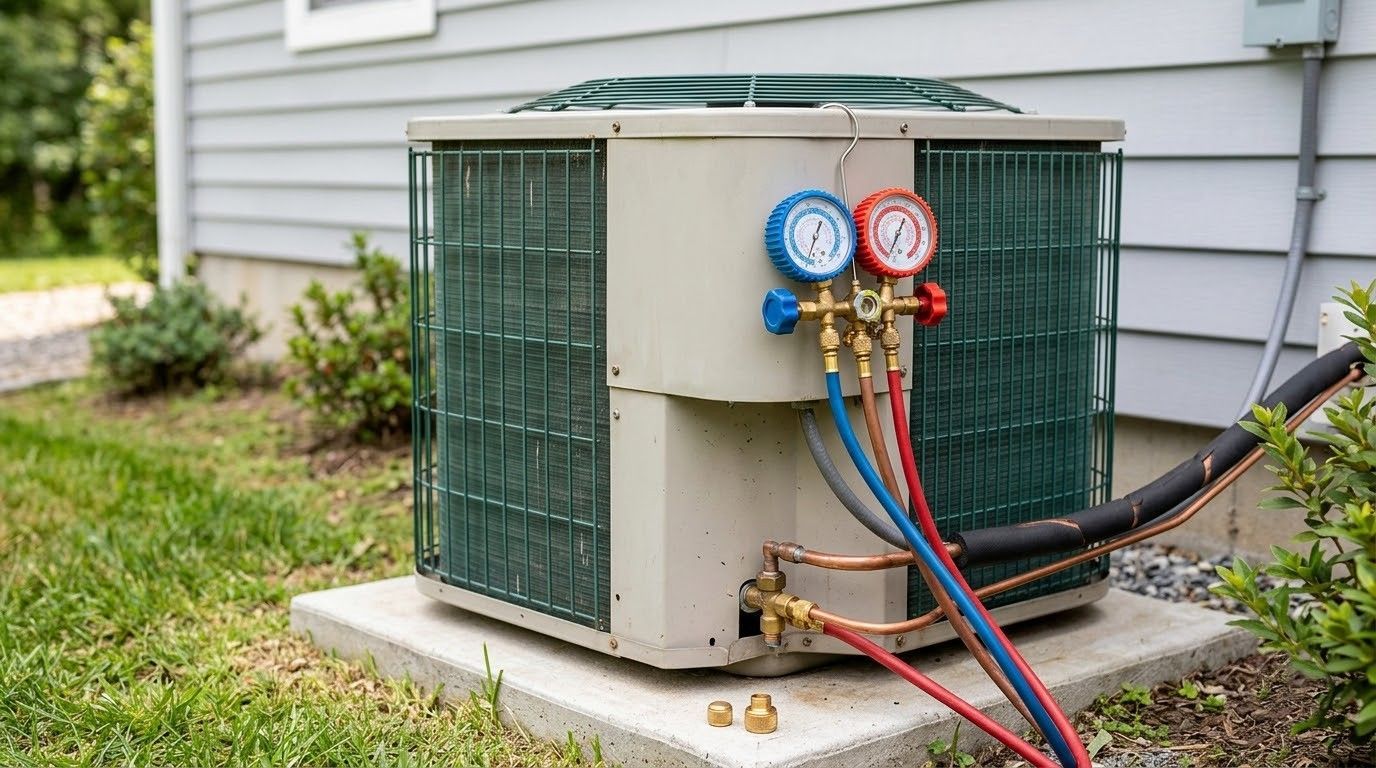
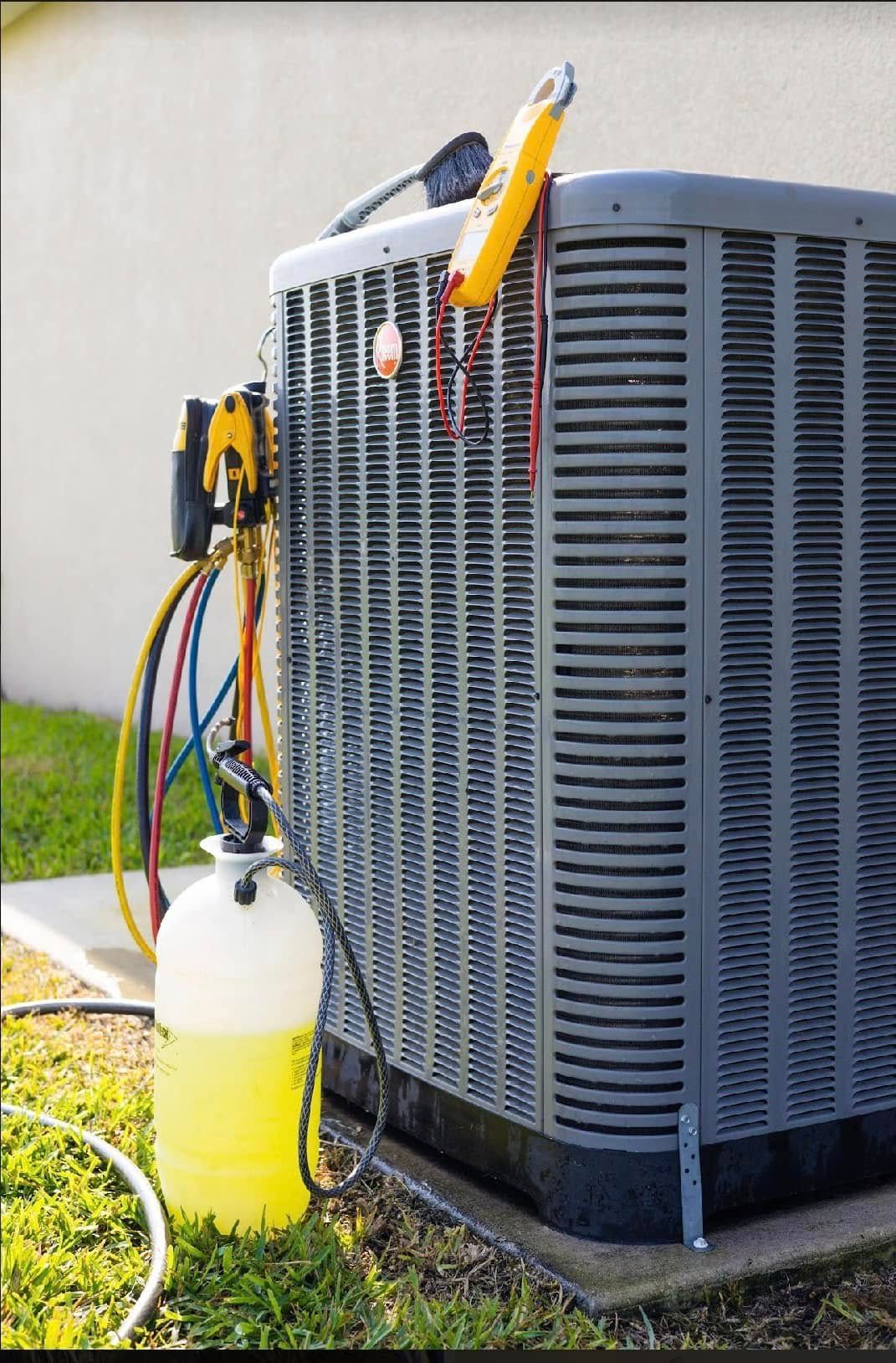
A TUNE-UP IS A MEASUREMENT, NOT A GLANCE.
The value in a tune-up is entirely in the instruments. Temperature split across the coil, static pressure across the filter, capacitor microfarads against rating, amp draw against nameplate, superheat, and subcooling against target. Any technician can look at a system and pronounce it fine. Only a set of readings can show whether it is actually delivering the capacity you are paying to run.
That is why we hand over the numbers afterward. You should be able to see what was measured rather than take a verbal assurance on trust.
- A full set of instrument readings taken
- Small drifts corrected during the visit
- $25 off for new customers
- Written figures from NATE-certified, licensed technicians
Quality doors from established manufacturers hold their finish and function longer than budget alternatives, which means fewer repairs and replacements over the life of your home. That durability protects the money you put into the purchase.
Long Term Value
AC TUNE-UPS
SMALL DRIFTS ADD UP TO A LARGE BILL.
No single item found on a tune-up looks expensive. A capacitor 15% below rating, a charge a little low, a filter slightly too restrictive, a contactor with pitted points. Individually each costs a few percent of efficiency and a fraction of component life. Together, left alone across several seasons, they are the difference between a system that reaches 15 years and one that quits at 9.
TIMED FOR THE HEAT WE ACTUALLY GET.
The right moment for a cooling tune-up here is early spring, before the first sustained run of high temperatures exposes every weak component at once. A system that limped through last September will not simply resume where it left off. Booking ahead of the rush also means you choose your appointment window rather than waiting behind everyone whose system has already failed.
TUNE-UPS ARE ONLY WORTH WHAT THE TECHNICIAN MEASURES.
We have spent 20+ years watching customers pay for inspections that produced nothing but a sticker on the cabinet. A visit that takes no readings cannot tell you anything about performance, and it certainly cannot catch a capacitor about to fail. Our own checklist exists because measurement is the only part of this particular service with any real value, so that is precisely what the appointment is built around.
WHAT A REAL TUNE-UP RETURNS
EFFICIENCY YOU ALREADY PAID FOR
Correcting charge, airflow, and coil condition recovers capacity the system was designed to deliver. That recovery shows up on the bill rather than in any change to how you use it.
EARLY REPLACEMENT OF WEAK PARTS
A capacitor reading below rating can be swapped in minutes during a scheduled visit. The same part failing in August means a hot house and an emergency callout charge.
A COOLER HOUSE THROUGH THE AFTERNOON
Systems that had begun losing ground after three o'clock often hold their setting again once airflow and charge are corrected. The improvement is usually noticeable within a day.
LONGER EQUIPMENT LIFE
Reducing head pressure, current draw, and run time all take strain off the compressor and motors. Small annual corrections compound into years of additional service from the same equipment.
A RELIABLE PERFORMANCE BASELINE
Recorded figures give next year's visit something to compare against. Trends matter more than single readings, and a baseline is what makes those trends visible at all.
CONFIDENCE BEFORE PEAK SEASON
Knowing the system was measured and corrected in spring removes the low-level worry every heat wave otherwise brings with it. That is worth something through a long FL summer.

WHAT WE CHECK
OUR AC TUNE-UP WORK.
A tune-up follows a fixed measurement sequence. Anything found outside specification is corrected where possible and quoted clearly where it needs a part. You see the figures at the end rather than a verbal summary, and you keep them.

TEMPERATURES
Temperature Split Measurement
Return and supply air temperatures are measured across the evaporator coil and compared against expected values. A narrow split is one of the earliest signs of lost capacity. It is also the quickest check to interpret.
PRESSURES
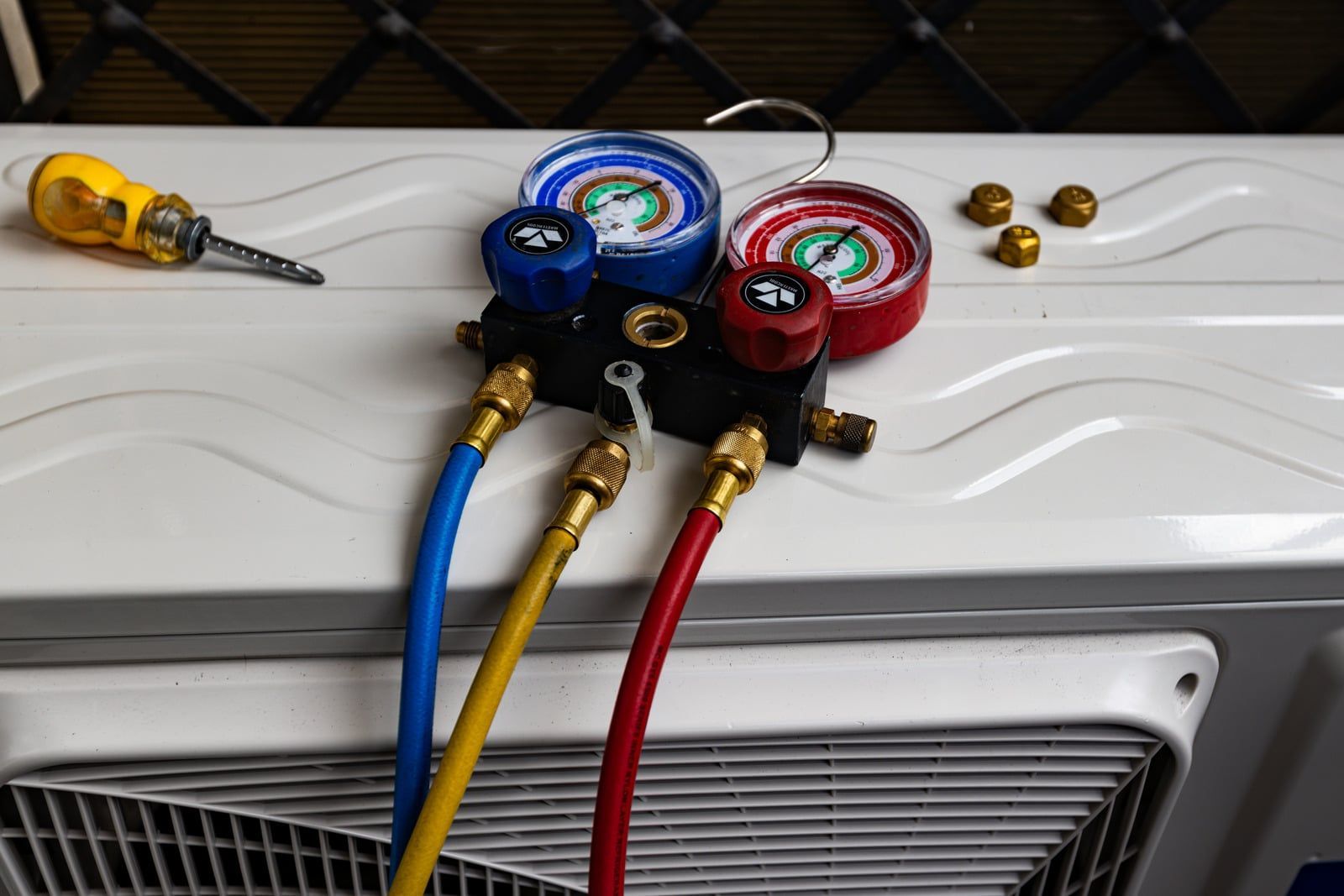
Refrigerant Pressure Testing
Suction and liquid pressures, superheat, and subcooling are taken and compared against the manufacturer's targets for prevailing conditions. Deviations point to charge level, restriction, or metering problems. Each figure is recorded on your written summary.
CAPACITORS
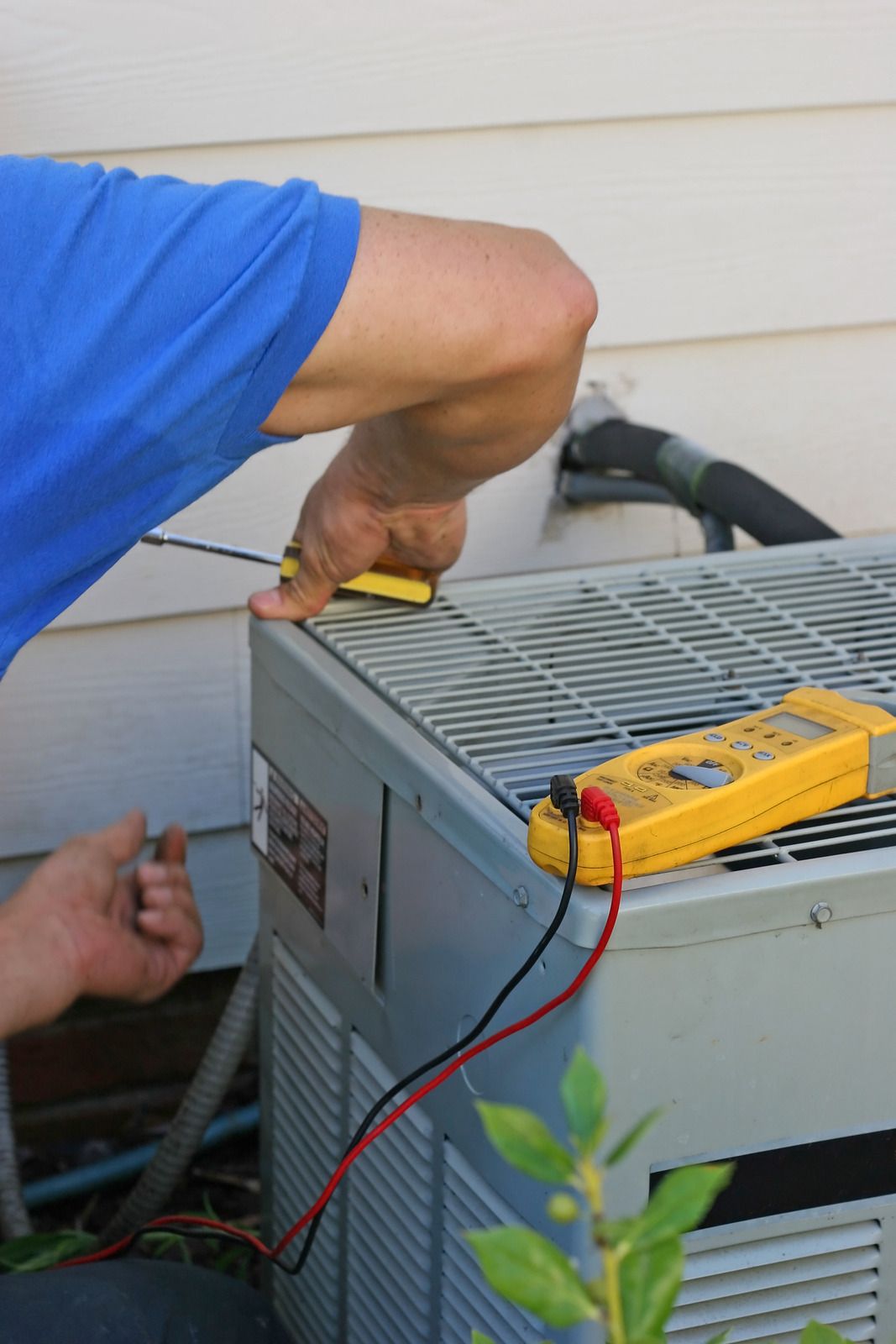
Capacitor and Contactor Testing
Capacitor values are measured against their rating and contactor points inspected for pitting. These two inexpensive components cause a very large share of the summer failures we attend. Both are inexpensive to replace before they fail.
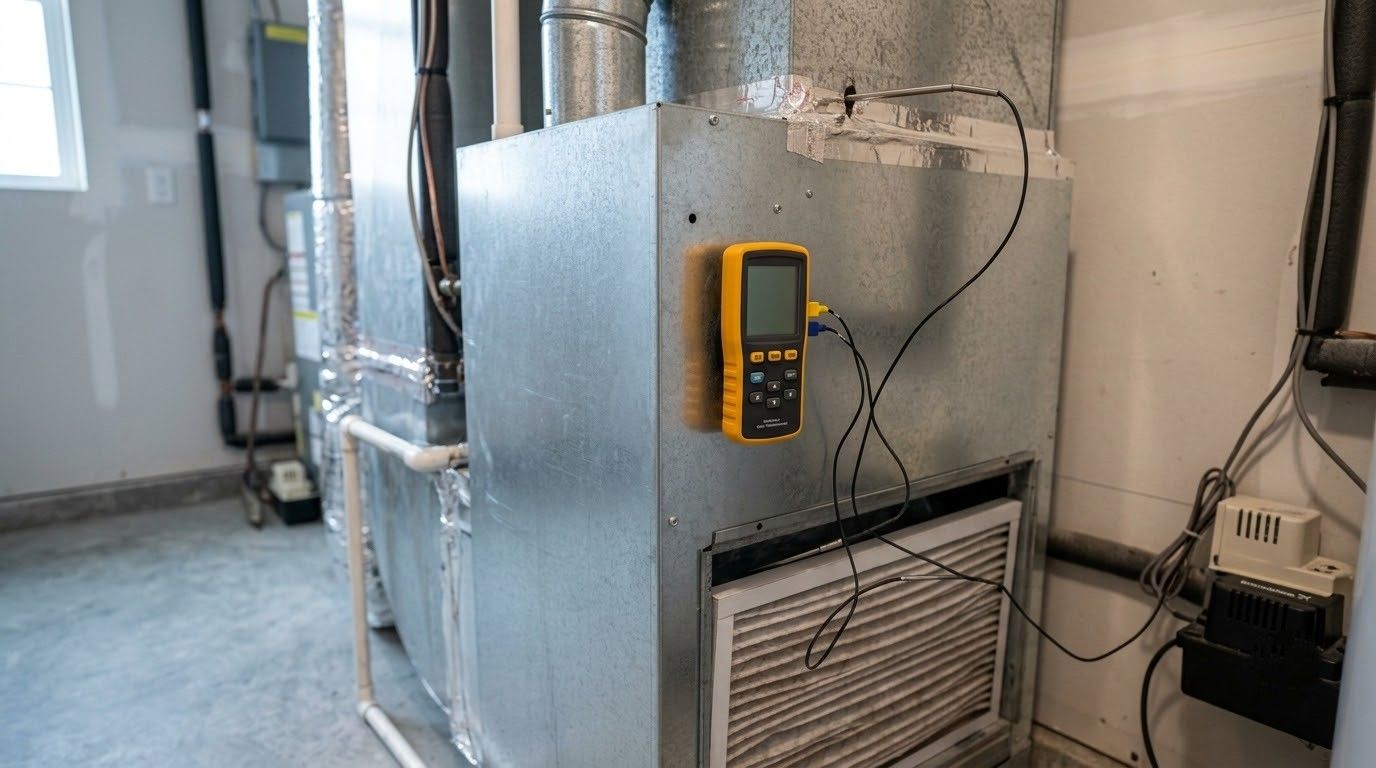
AIRFLOW
Static Pressure and Airflow Checks
Total external static pressure tells us whether the blower is fighting the duct system. High readings explain frozen coils and poor cooling that look like equipment faults from outside. Duct problems get flagged for separate assessment.
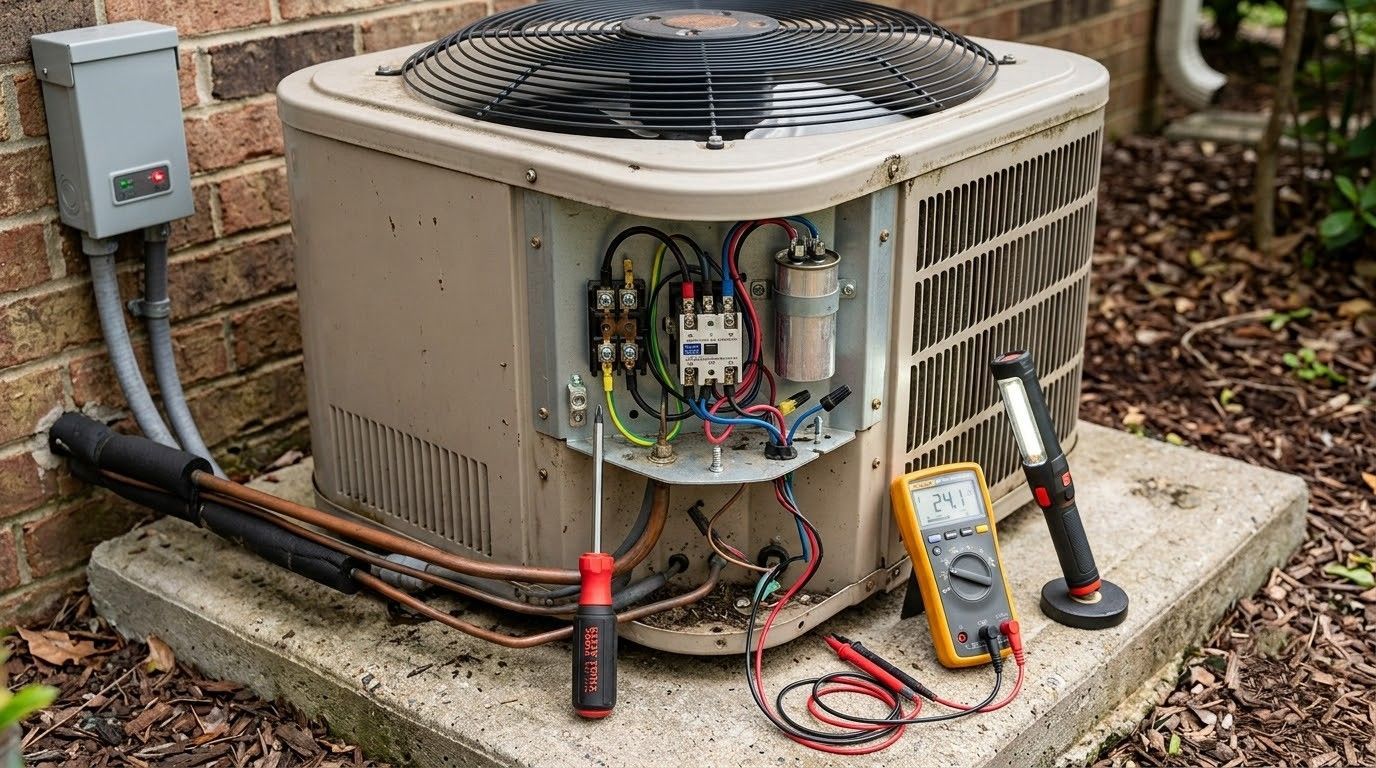
CLEANING
Coil and Cabinet Cleaning
Condenser and evaporator surfaces are cleaned, the cabinet cleared, and the drain flushed. Clean heat transfer surfaces are the cheapest efficiency improvement available to any system. Deep evaporator cleaning is offered at a discounted rate.
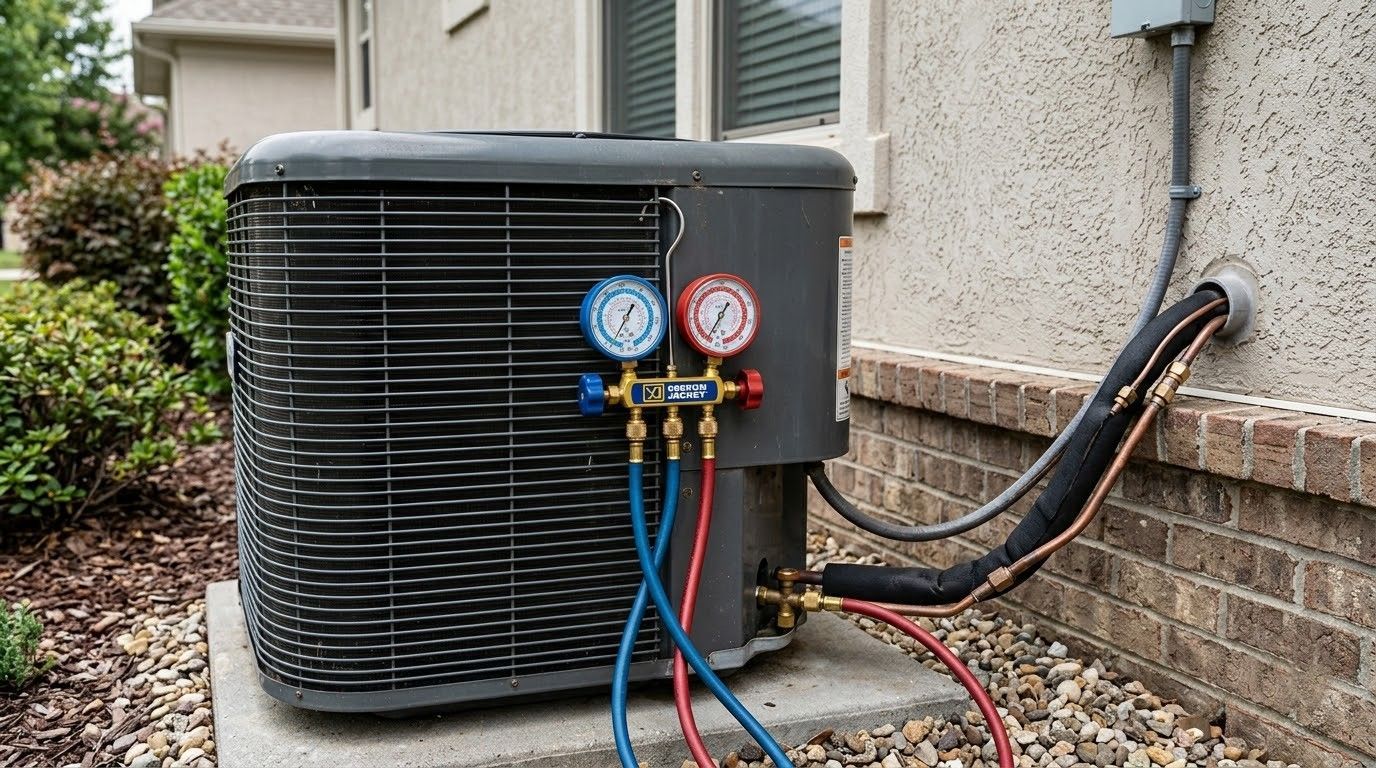
TIGHTENING
Connection and Hardware Checks
Electrical terminals are tightened, mounting hardware checked, fan blades inspected, and the disconnect examined. Loose connections generate heat, and heat is what eventually destroys them entirely. Anything scorched or corroded is photographed and reported.
THE WORD ON OUR WORK
WHAT OUR CLIENTS SAY.
Tune-up reviews tend to arrive from people who had booked the same service elsewhere before. What they usually comment on is the difference in what actually happened during the visit, and the fact that they were handed real figures at the end.
Common Questions
frequently asked
questions.
These questions come up whenever someone books a tune-up for the first time. Ask us anything else while the technician is still at the equipment.
What is actually included in an AC tune-up?
Temperature split, refrigerant pressures, superheat, and subcooling, static pressure, capacitor values, amp draw, and contactor condition are all measured. Coils are cleaned, the drain flushed, and connections tightened. You receive every figure in writing.
How is a tune-up different from maintenance?
The terms overlap heavily. We treat a tune-up as a single measured performance visit, while a maintenance plan schedules those visits twice a year and adds discounts and priority service.
How often should I get a tune-up?
Once before each cooling season at minimum. Given how long systems run here, most households benefit from a second visit ahead of the cooler months to cover the heating side.
Will a tune-up fix a system that is not cooling?
Sometimes, if the cause is dirty coils, low charge, or restricted airflow. Where the fault is a failed component, the tune-up identifies it and we quote the repair separately for you.
Is a tune-up worth it on a new system?
Yes, and manufacturers usually require it. New equipment still accumulates dirt and drift, and skipping documented service is one of the more common reasons warranty claims get declined. Registration alone does not protect the claim.
How long does a tune-up appointment take?
Around 60 to 90 minutes for one system, longer if coils need heavier cleaning. Mission Air Services, Inc. schedules realistic windows for Plant City, FL customers rather than rushing between calls.
Can a tune-up lower my electricity bill?
Often, though the size of the change depends on how far the system had drifted. Restoring clean coils and correct charge on a neglected unit produces the most noticeable difference.
What if you find something wrong?
You are shown the reading, told what it means, and given a written price for the correction. Nothing is repaired without your approval, and declining costs you nothing extra. Member pricing is applied automatically where it qualifies.
We Finalize Your Order
STEP 04
Once you choose a product, we confirm every specification, from swing direction to hardware preparation, before placing the order, so the door that arrives matches what was actually agreed upon.
HOW WE WORK
FROM FIRST READING TO FINAL FIGURES, HERE IS HOW.
STEP 01
WE RECORD THE STARTING CONDITION
Before touching anything, we take a baseline set of readings while the system runs as you have been running it. That gives us something honest to measure the finished work against. Without a baseline there is nothing to compare afterward.
STEP 02
WE TEST THE AIR SIDE
Static pressure, temperature differential, filter restriction, and register airflow are measured. Airflow faults distort every other reading, so establishing them first keeps the rest of the diagnosis honest. A restricted filter alone can distort every subsequent measurement badly.
STEP 03
WE TEST THE REFRIGERANT SIDE
Gauges go on and pressures, superheat, and subcooling are compared against manufacturer targets for the day's conditions. Any deviation gets investigated rather than corrected by simply adding refrigerant. Low charge always means a leak that needs locating properly.
STEP 04
WE CLEAN WHAT NEEDS CLEANING
Condenser and evaporator surfaces, cabinet interiors, and the condensate line all get attention. Clean heat transfer surfaces recover more efficiency than most of the upgrades people consider buying. Debris around the outdoor cabinet is cleared away as well.
STEP 05
WE CORRECT THE SMALL FAULTS
Loose terminals tightened, weak capacitors flagged or replaced, charge adjusted, and hardware secured. Anything needing a part you have not approved is quoted rather than fitted on the spot. You decide what proceeds, and there is no pressure either way.
STEP 06
WE MEASURE AGAIN AND REPORT
A closing set of readings shows what the visit actually changed. Both sets go on your written summary so the improvement is visible rather than something you are asked to believe. Both sets of figures stay in your file.