
HVAC SYSTEM DIAGNOSTICS
HVAC SYSTEM DIAGNOSTICS IN Plant City, FL.
Replacing parts until something works is not diagnosis, it is shopping with your own money. Mission Air Services, Inc. performs HVAC system diagnostics across Plant City, FL, Lakeland, and Riverview, measuring pressures, airflow, and electrical values right across the whole system. Second opinions cost nothing, NATE-certified technicians, license CAC1820450, and diagnostic visits book through our own contact page.
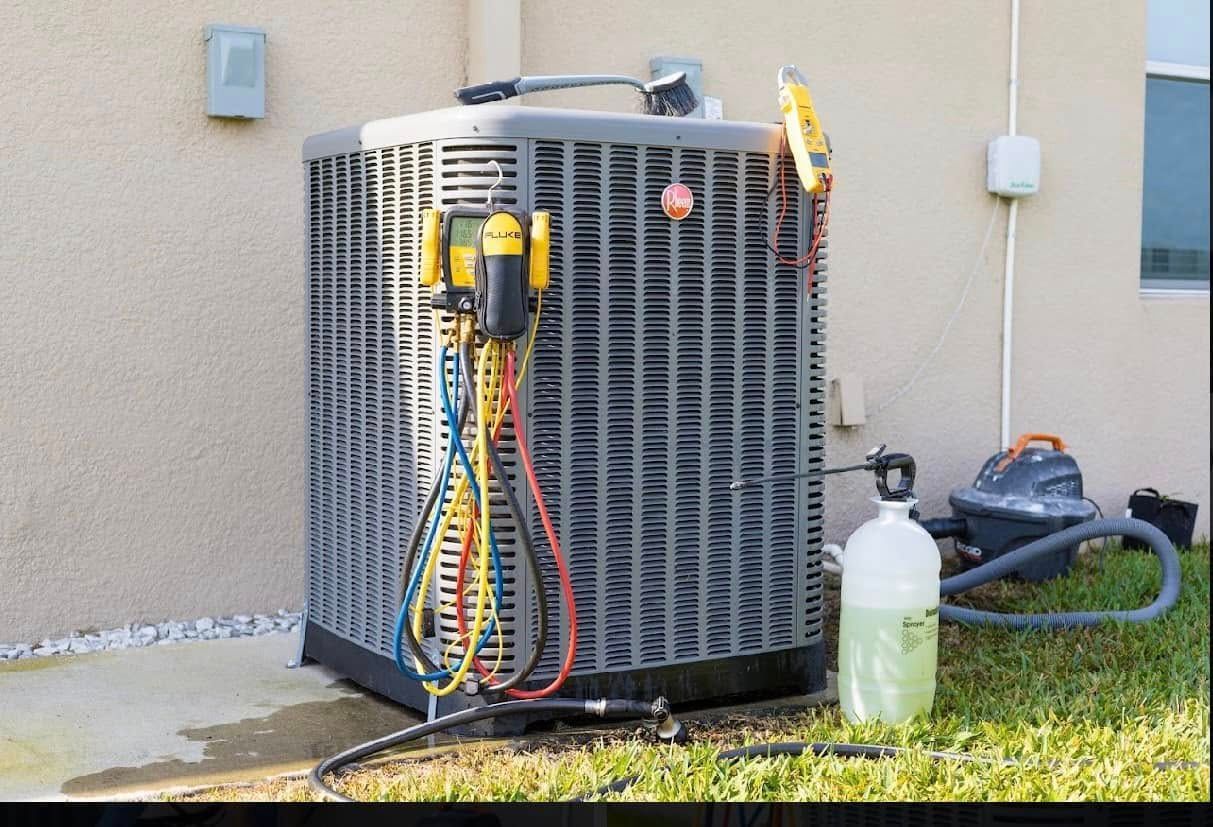
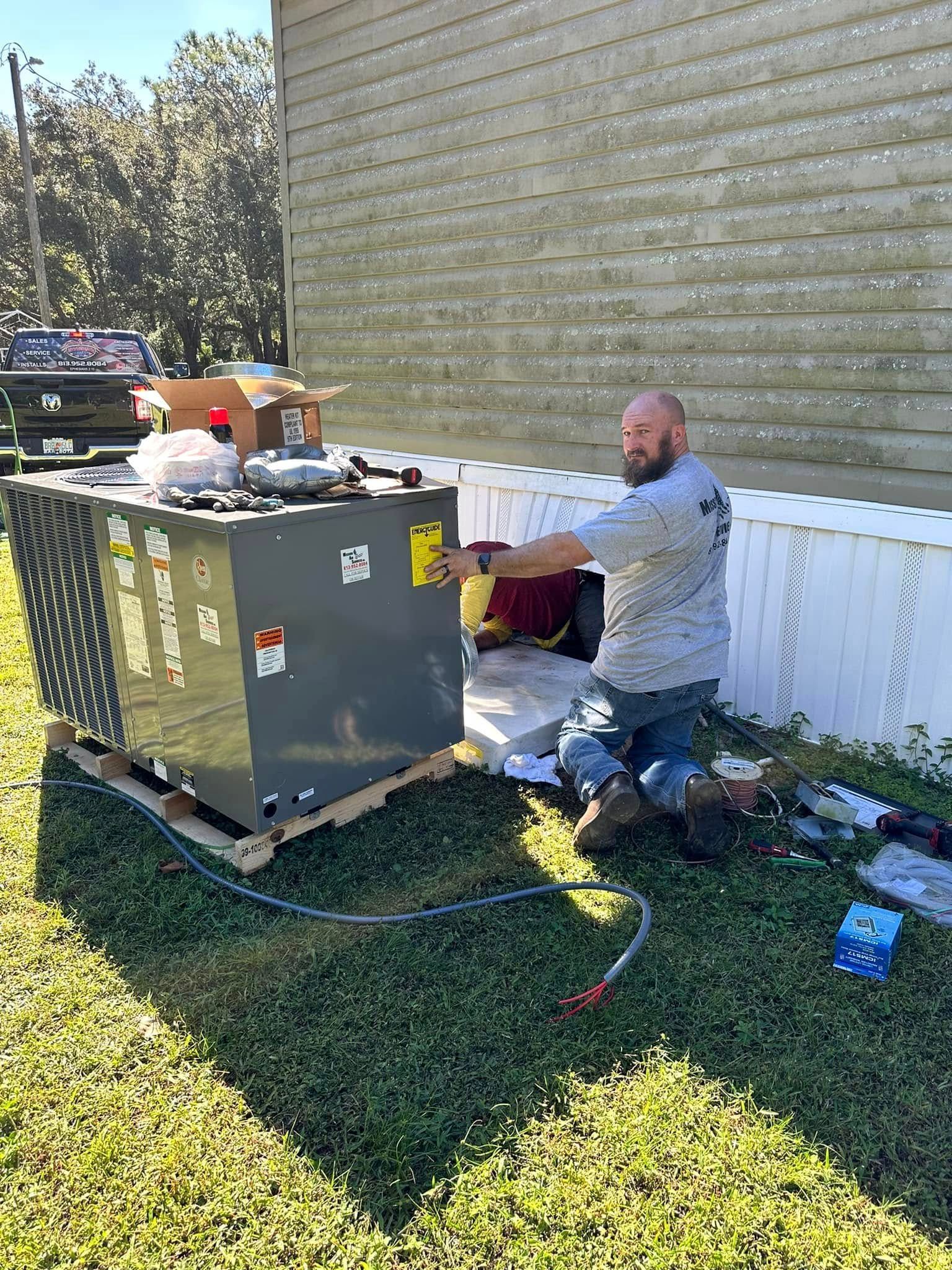
A GOOD DIAGNOSIS COSTS LESS THAN A WRONG REPAIR.
Symptoms lie constantly in this trade. Weak cooling can come from low charge, a restricted filter, a failing blower motor, a dirty coil, leaking ducts, or a control problem, and four of those cost very little to correct. Guessing wrong means paying for a part that changed nothing and still owning the original complaint the following week.
Measurement removes the guessing entirely. Pressures, temperature differentials, static readings, and current draw together narrow the possibilities down to one, and once that is settled the repair itself is usually straightforward.
- Full-system readings, not a single spot check
- Every measurement written down for you
- Free second opinion on another firm's quote
- Every reading taken under license CAC1820450
Quality doors from established manufacturers hold their finish and function longer than budget alternatives, which means fewer repairs and replacements over the life of your home. That durability protects the money you put into the purchase.
Long Term Value
HVAC SYSTEM DIAGNOSTICS
THE NUMBERS TELL A STORY THE SYMPTOMS CANNOT.
An air conditioner is a set of relationships: suction pressure against ambient, temperature split across the coil, static pressure across the filter, amp draw against nameplate. Individually each reading means little. Read together, they point directly at what is failing and, just as usefully, at what is fine. That is why we take the full set rather than checking the one gauge that matches the customer's description.
FL CONDITIONS CHANGE WHAT NORMAL LOOKS LIKE.
Diagnostic targets shift with ambient temperature and humidity, and readings that would clearly indicate a fault in a dry climate can be perfectly normal on a humid August afternoon here. Interpreting them without that context produces confident and expensive mistakes. We evaluate every measurement against local conditions and against the system's own design, which is how we avoid condemning components that are working exactly as intended.
A GAUGE SET DOES NOT CARE WHAT ANYONE GUESSED.
We have spent 20+ years being called in after a diagnosis somebody was not satisfied with, and the pattern repeats: a part was named quickly and the measurements were never taken. Sometimes the original call was right and we say so. Often it was not, and the actual fault turns out to be cheaper. Either way, you get the readings, and you get to decide with the numbers in front of you.
WHAT A PROPER DIAGNOSIS GIVES YOU
CERTAINTY ABOUT THE ACTUAL FAULT
You learn what failed and why, backed by recorded measurements rather than assertion. That removes the nagging worry that you have paid good money to replace something that was never the problem.
MONEY SPENT ON THE RIGHT REPAIR
Correct identification means one repair instead of a sequence of attempts. The diagnostic fee routinely pays for itself several times over on the very first component it prevents you replacing.
EARLY WARNING ON OTHER COMPONENTS
A full set of readings shows what else is drifting. A capacitor reading low or a motor pulling high current can be addressed now, at your convenience, rather than during the next heat wave.
A DOCUMENTED SYSTEM BASELINE
Recorded measurements become a permanent reference point. Next season, comparing fresh readings against the old ones shows exactly what has changed and how quickly, which sharpens every decision you make afterward.
CONFIDENCE IN A REPLACEMENT DECISION
If the honest answer is that the system is finished, the readings show why. Nobody has to take a recommendation on faith when the compressor amperage and coil temperatures are on the page.
A REAL SECOND OPINION
When another company has quoted heavily, an independent set of measurements either confirms the diagnosis or does not. That clarity is worth having before authorizing any significant expenditure on your equipment.

WHAT WE TEST
OUR HVAC DIAGNOSTIC WORK.
A diagnostic visit follows the same sequence regardless of the complaint, because the fault is often somewhere other than where the symptom appears. Each area gets measured, not inspected by eye.
REFRIGERANT
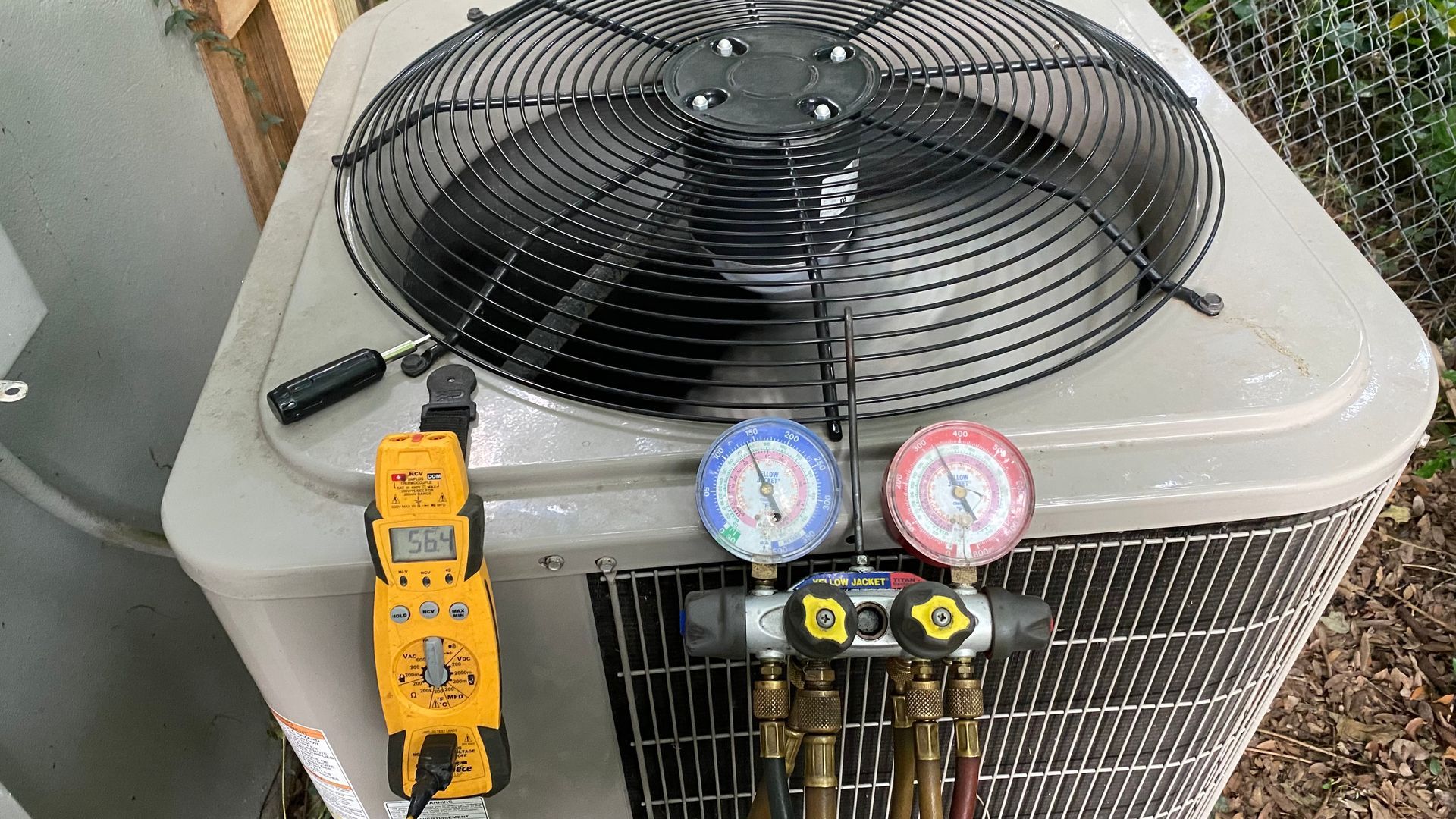
Refrigerant Charge Analysis
Suction and liquid pressures, superheat, and subcooling are measured and compared against manufacturer targets for current conditions. These figures reveal undercharge, overcharge, restrictions, and metering device problems with real precision.
AIRFLOW
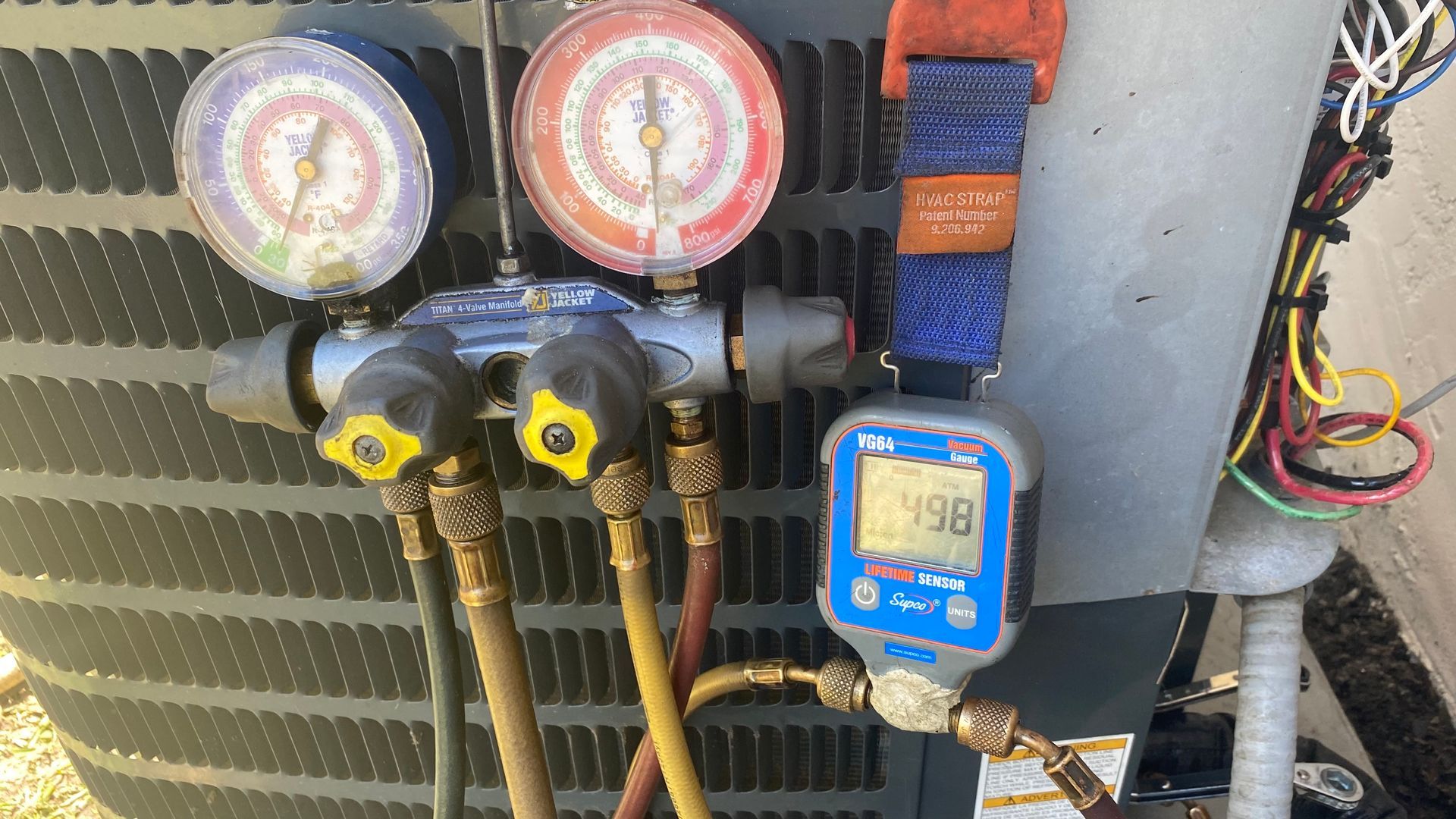
Airflow and Static Pressure Testing
Total external static pressure tells us whether the blower is fighting the duct system. High readings explain frozen coils, poor cooling, and premature motor failures that look like equipment faults from outside.
ELECTRICAL
Electrical Load Testing
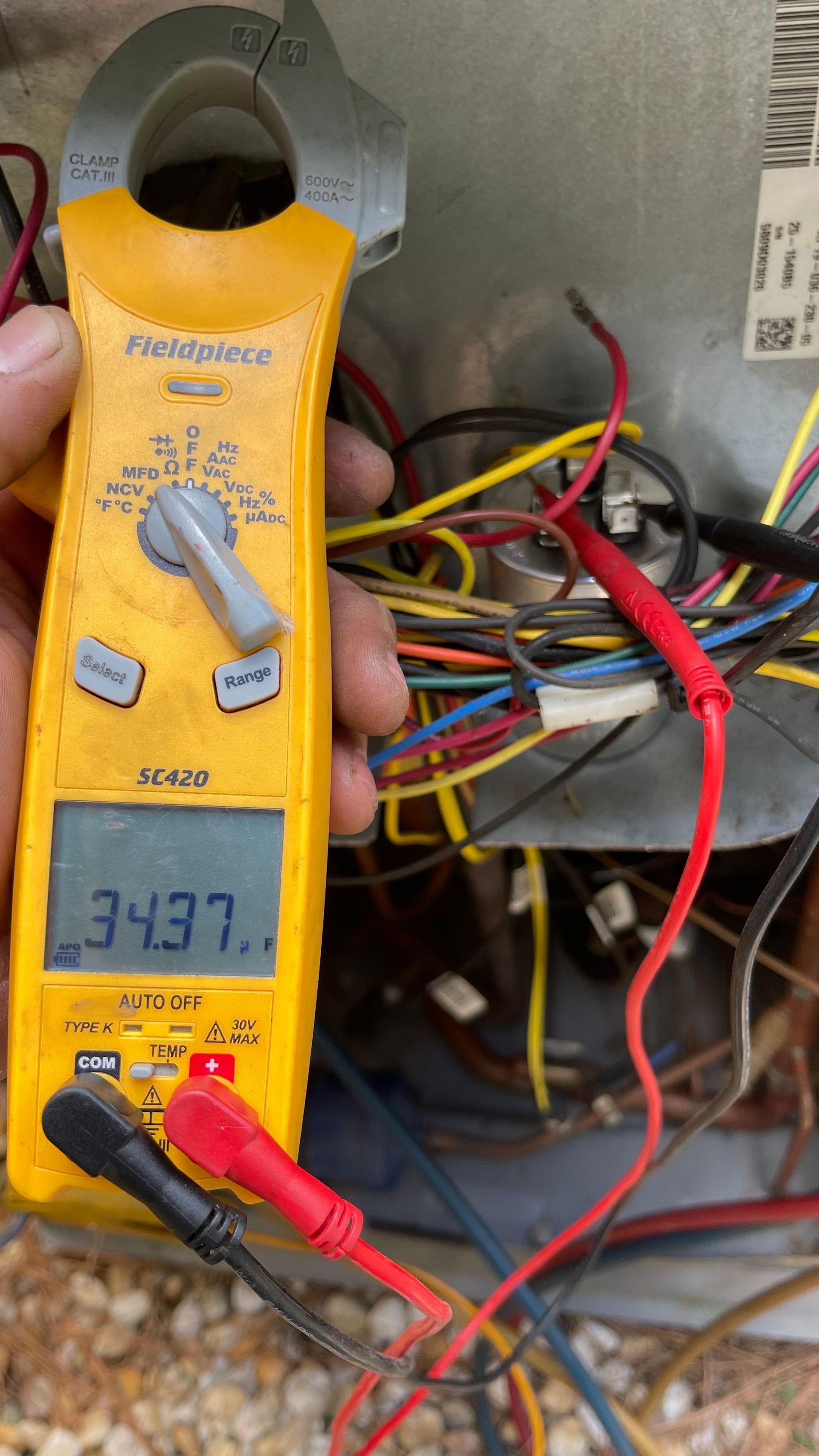
Voltage, amperage, capacitor microfarads, and contactor condition are all measured under load. Compressors and motors announce their decline through rising current draw long before they finally refuse to start one morning.
TEMPERATURES
Temperature Differential Checks
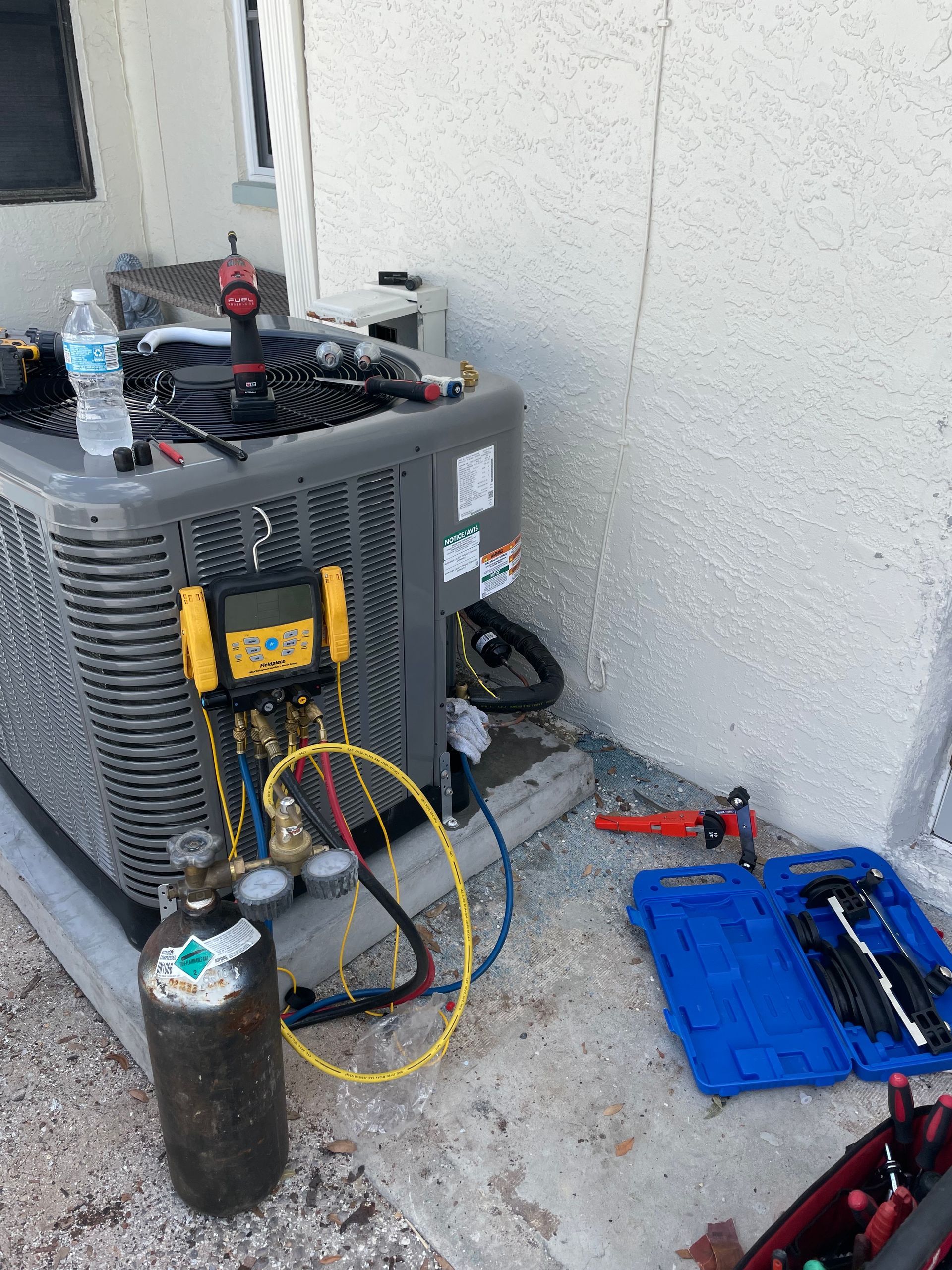
Return and supply temperatures across the coil show whether the system is moving the heat it should. A split outside the expected range is one of the fastest indicators that something is wrong.
CONTROLS
Control and Sequence Verification
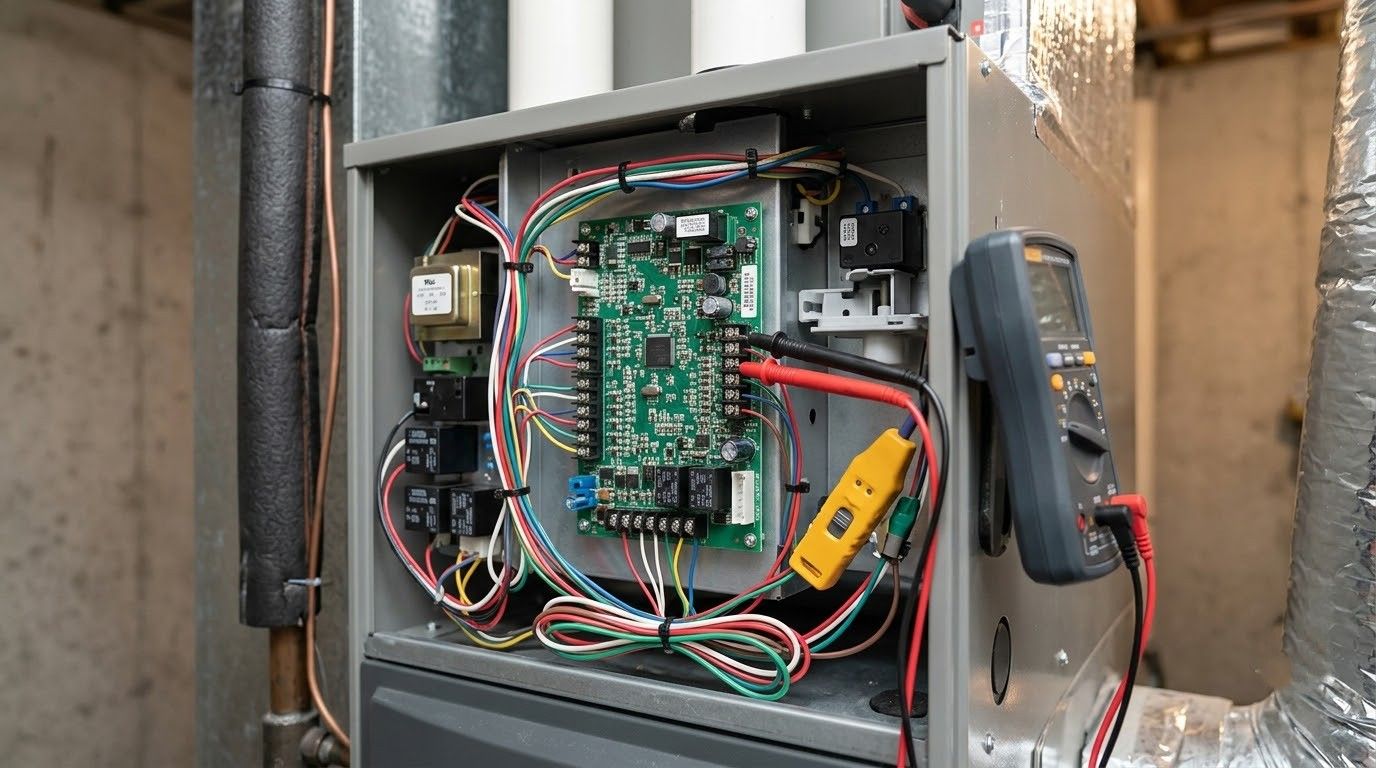
Thermostat calls, board outputs, safety switches, and staging are all traced through their sequence. Plenty of apparent equipment failures turn out to be a control or a safety doing exactly its job.
LEAK FINDING
Refrigerant Leak Detection
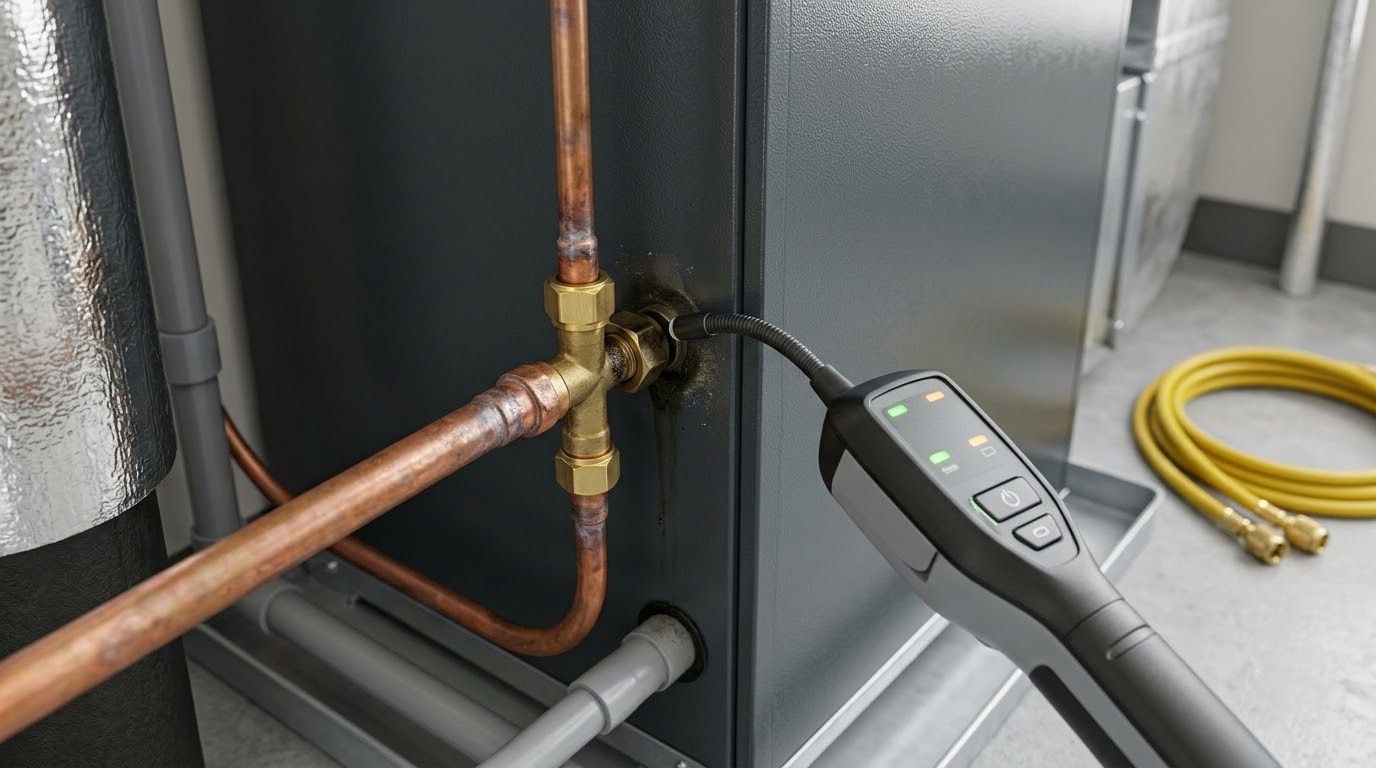
Where charge is low, we locate the leak rather than simply topping the system up. Electronic detection and, where needed, dye tracing find the point of loss so the repair actually holds.
THE WORD ON OUR WORK
WHAT OUR CLIENTS SAY.
The diagnostic reviews we value most come from people who called us for a second opinion and ended up spending less than they expected. Those notes usually mention being shown the readings and understanding, for the first time, what was actually wrong.
Common Questions
frequently asked
questions.
Customers booking a diagnostic visit ask these questions regularly. Anything not covered below is worth raising while the technician still has the gauges connected to your system.
What happens during an HVAC diagnostic?
We measure refrigerant pressures, superheat, and subcooling, temperature split, static pressure, and electrical draw, then verify the control sequence. Those readings together identify the fault rather than narrowing it to a rough guess.
How long does a diagnostic take?
Typically 60 to 90 minutes for a residential system. Intermittent faults, refrigerant leak location, or airflow problems hidden in ductwork can take longer, and we tell you before extending the visit.
Why is my AC running but not cooling?
Common causes include low refrigerant charge, a frozen evaporator coil, restricted airflow, a failing compressor, or leaking ducts. Each produces a distinct set of readings, which is precisely why measurement matters here.
Can you diagnose an intermittent problem?
Often yes, because intermittent faults leave traces in electrical readings, capacitor values, and safety switch history. Where the fault genuinely will not appear, we can fit monitoring rather than guessing at a repair.
Do I still pay for diagnostics if I go ahead with the repair?
Ask us when booking, because it depends on the work involved. What we will always do is quote the repair separately and clearly, so you are never agreeing to a total you have not seen.
Should I get a second opinion on an HVAC quote?
If the figure surprised you, absolutely. Mission Air Services, Inc. offers free second opinion estimates on repairs across Plant City, FL, and an independent set of measurements settles the question quickly either way.
What causes a frozen evaporator coil?
Restricted airflow or low refrigerant, almost every time. A blocked filter, closed vents, a failing blower, or a slow leak all drop coil temperature far enough for condensation to freeze solid.
Can a diagnostic tell me how long my system will last?
Not to the month, but readings on compressor current, capacitor health, coil condition, and efficiency give a well-grounded estimate. That is far more useful than age alone when planning a replacement.
We Finalize Your Order
STEP 04
Once you choose a product, we confirm every specification, from swing direction to hardware preparation, before placing the order, so the door that arrives matches what was actually agreed upon.
HOW WE WORK
FROM SYMPTOM TO MEASURED ANSWER, HERE IS HOW.
STEP 01
WE TAKE THE HISTORY
What changed, when it started, whether it is constant or intermittent, and what has already been done to it. That history frequently narrows the search before a single instrument comes out of the bag.
STEP 02
WE OBSERVE THE SYSTEM RUNNING
Before connecting anything, we watch a full cycle. Startup behavior, noises, cycle length, and airflow at the registers all reveal a great deal about where the problem is likely to sit. Watching a full cycle often shortens the diagnosis considerably.
STEP 03
WE MEASURE THE AIR SIDE
Static pressure, temperature differential, filter restriction, and register airflow all come first, because airflow faults cause symptoms right across the whole system and are cheap to rule in or out. Airflow faults are the cheapest thing to eliminate first.
STEP 04
WE MEASURE THE REFRIGERANT SIDE
Gauges go on, and pressures, superheat, and subcooling get compared against the manufacturer's targets for the current ambient conditions. Discrepancies here point directly at charge level, restriction, or compressor performance. Adding refrigerant without finding the leak is not a repair.
STEP 05
WE CHECK THE ELECTRICALS AND CONTROLS
Voltage, amperage, capacitors, contactors, safety switches, and the thermostat sequence are all verified. Components drifting toward failure get recorded even when they are not the cause of today's particular complaint. Early warnings are worth having even when they cost nothing today.
STEP 06
WE EXPLAIN AND QUOTE
You get the readings, an explanation of what they mean, and a written price for the correction. Nothing proceeds without your approval, and declining the repair costs you nothing further. The readings are yours to keep either way.