SURGE PROTECTION
SURGE PROTECTION IN Plant City, FL.
Central FL records more lightning than almost anywhere else, and your condenser is the most expensive thing plugged in. Mission Air Services, Inc. installs HVAC surge protection across Plant City, FL, Lakeland, and Riverview, shielding compressors and control boards. Members save 15%, all work licensed under CAC1820450 and fully insured, with free assessments booked on our contact page.
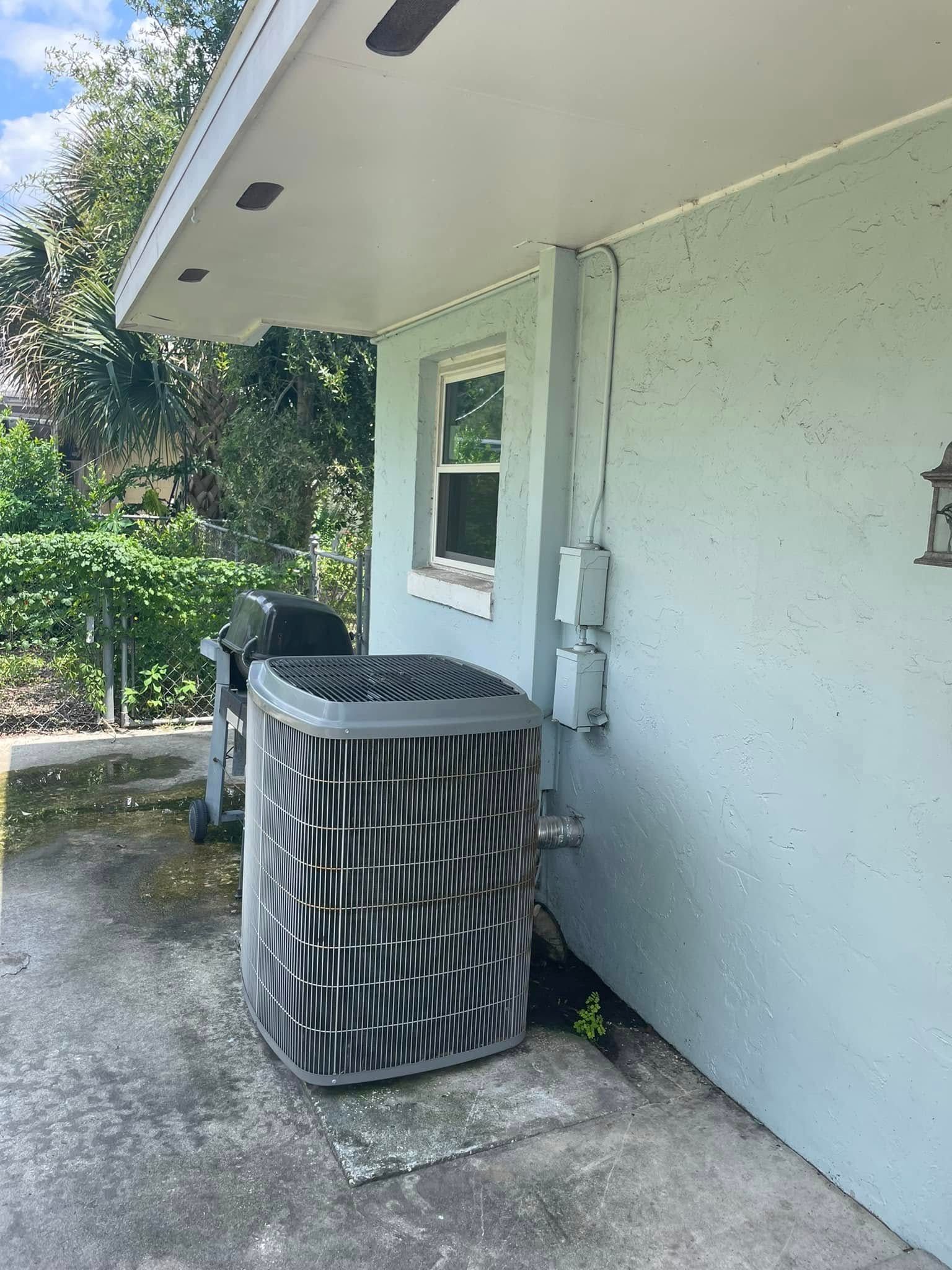
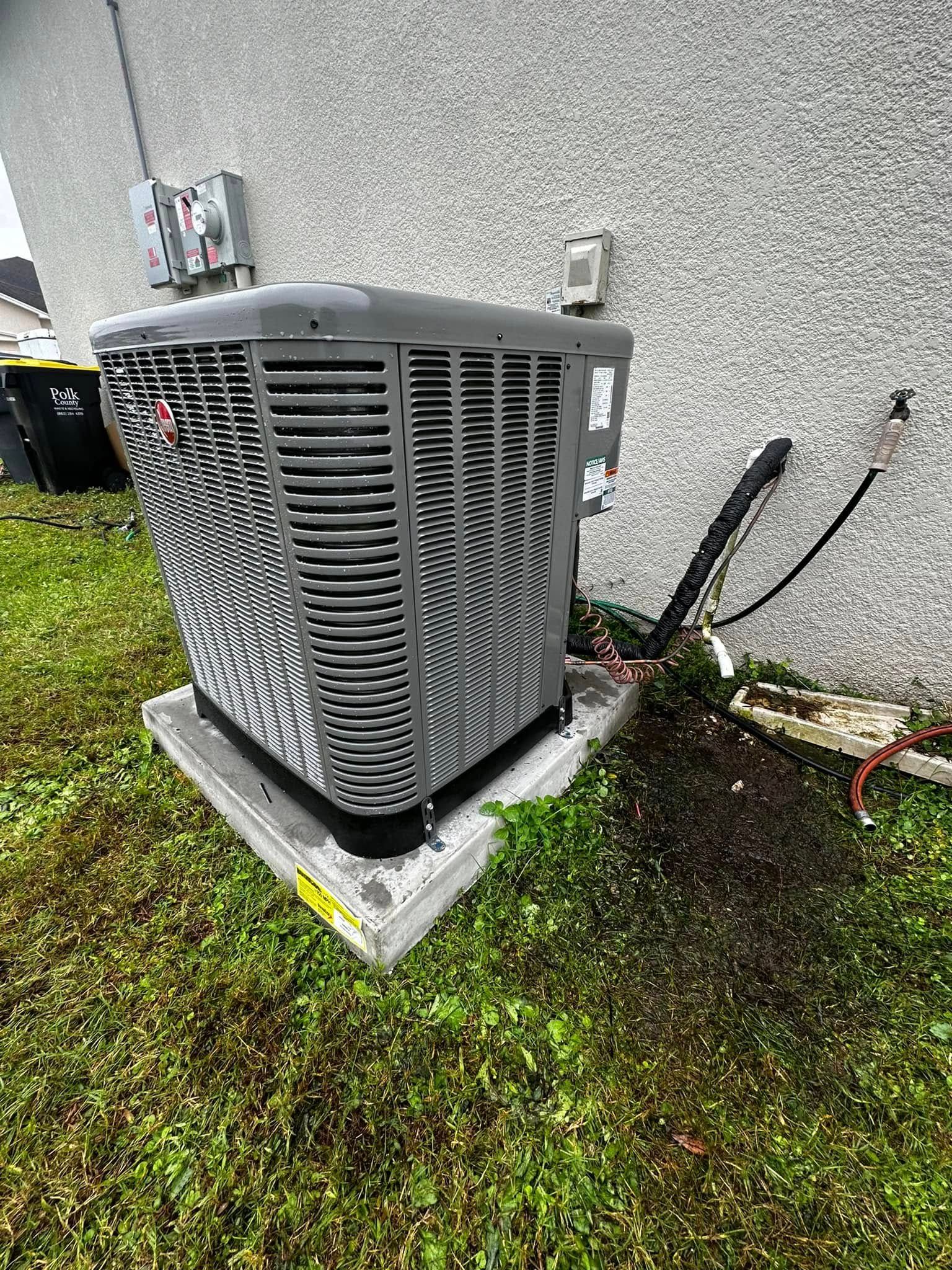
ONE STRIKE COSTS MORE THAN A DECADE OF PROTECTION.
Surge damage rarely announces itself with a bang. More often a board fails weeks later, or a compressor that took a hit runs hot and dies early, and nobody connects the two events. Protection is inexpensive insurance against a failure mode that is common here, expensive to repair, and almost never covered as a warranty defect.
The math here is not complicated. A protector costs a small fraction of what a compressor costs to replace, and it defends the components least likely to survive a nearby strike unaided.
- Protection at the condenser and air handler
- Whole-home options assessed at the panel
- 15% member discount on surge protectors
- Fitted under license CAC1820450, alongside other work
Quality doors from established manufacturers hold their finish and function longer than budget alternatives, which means fewer repairs and replacements over the life of your home. That durability protects the money you put into the purchase.
Long Term Value
SURGE PROTECTION
YOUR SYSTEM IS FULL OF ELECTRONICS THAT DID NOT EXIST BEFORE.
Older air conditioners were mostly motors, contactors, and copper, and they shrugged off a great deal. Modern equipment runs on communicating control boards, inverter drives, and variable-speed motors, all of which are far more efficient and far less tolerant of a voltage spike. The upgrade that lowered your power bill also introduced delicate components that a single summer storm can destroy in under a millisecond.
STORM SEASON HERE IS NOT AN OCCASIONAL EVENT.
From June through September, afternoon thunderstorms are close to a daily fixture across Hillsborough County and Polk County, and each one brings both direct strikes and the smaller induced surges that travel in on utility lines. Add the switching transients that follow every grid outage and restoration, and equipment here absorbs far more electrical abuse in a season than the same model would elsewhere in years.
ONE LIGHTNING STRIKE TEACHES A LESSON NOBODY FORGETS.
Across 20+ years of storm seasons we have opened plenty of units with scorched boards, welded contactors, and compressors that never ran right again afterward. Almost none of those homes had protection fitted. We are not going to pretend a protector makes equipment invulnerable, because a direct strike can overwhelm anything, but the induced surges that cause most of this damage are exactly what these devices are built to absorb.
WHAT SURGE PROTECTION SAVES YOU
THE MOST EXPENSIVE COMPONENT
Compressors are rarely worth replacing on their own, so surge damage there often forces an entire system replacement. Protecting that one component changes the worst-case outcome of a storm considerably.
CONTROL BOARDS AND INVERTER DRIVES
Modern boards and variable-speed drives are costly and frequently on back order in peak season. Keeping them alive avoids both the parts bill and the wait that comes with it.
DOWNTIME IN THE WORST WEATHER
Storm-related failures cluster in the hottest months, exactly when every contractor in the county is booked solid. Avoiding the failure entirely is far better than joining a queue for repairs.
YOUR WARRANTY POSITION
Manufacturers treat surge damage as an external event rather than a defect, so warranty claims routinely get declined. Protection covers the gap that the paperwork on your new equipment deliberately leaves open.
OTHER CONNECTED EQUIPMENT
A whole-home device at the panel adds a layer for appliances, electronics, and well pumps too. The HVAC system is the priority, but it is rarely the only casualty of a serious surge.
QUIET PEACE OF MIND
Storms stop being something to think about. You are not calculating risk every time the sky darkens over the neighborhood, which is worth something on its own during a long FL summer.
WHAT WE INSTALL
OUR SURGE PROTECTION WORK.
Effective protection is layered rather than single-point. Where the devices sit matters just as much as which ones you choose, and we assess both of those together during the assessment visit.
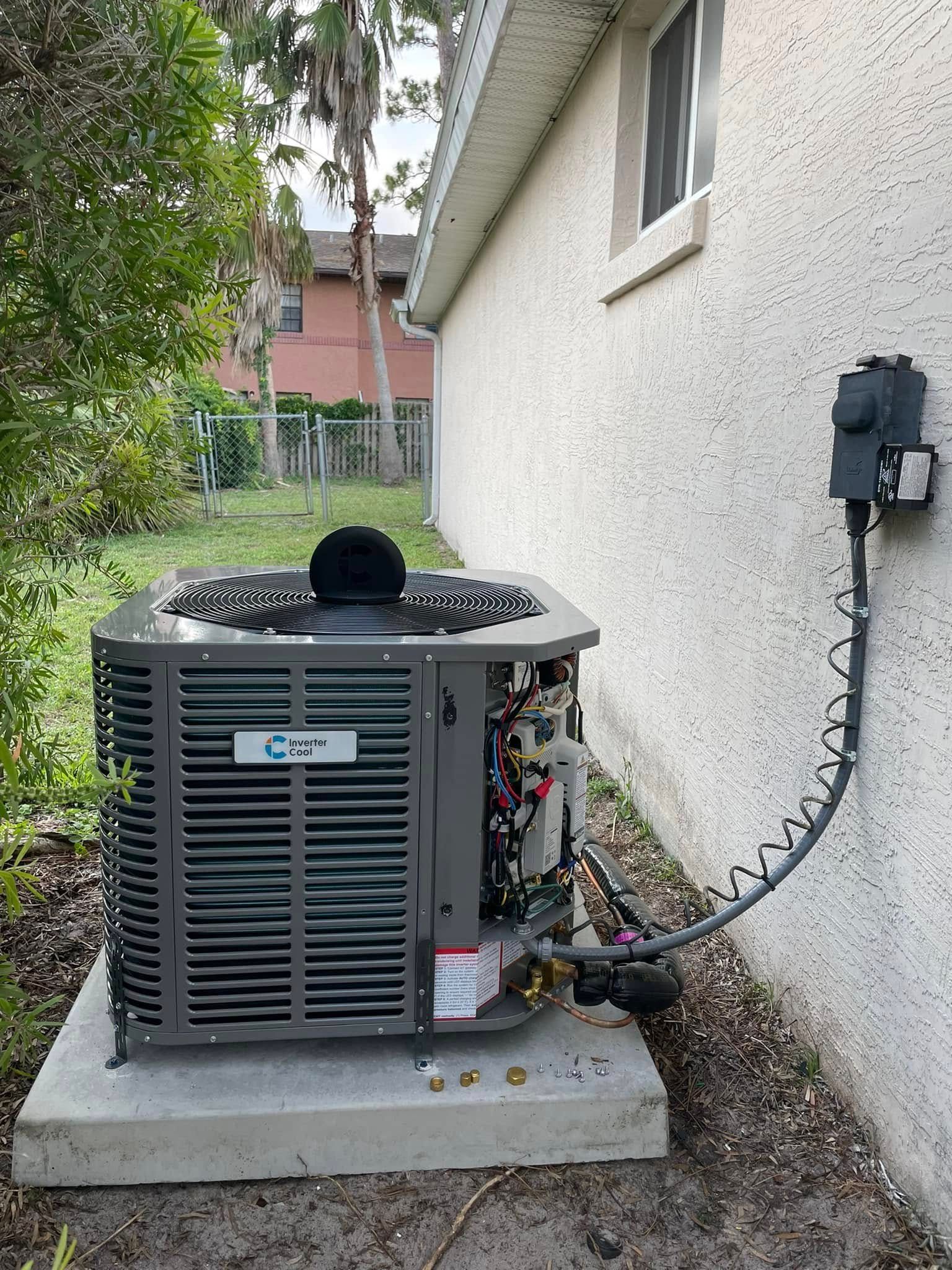
OUTDOOR UNIT
Condenser Surge Protectors
Fitted at the outdoor disconnect, these absorb spikes before they reach the compressor and fan motor. This is the single highest-value position in the system, and it is quick to install.
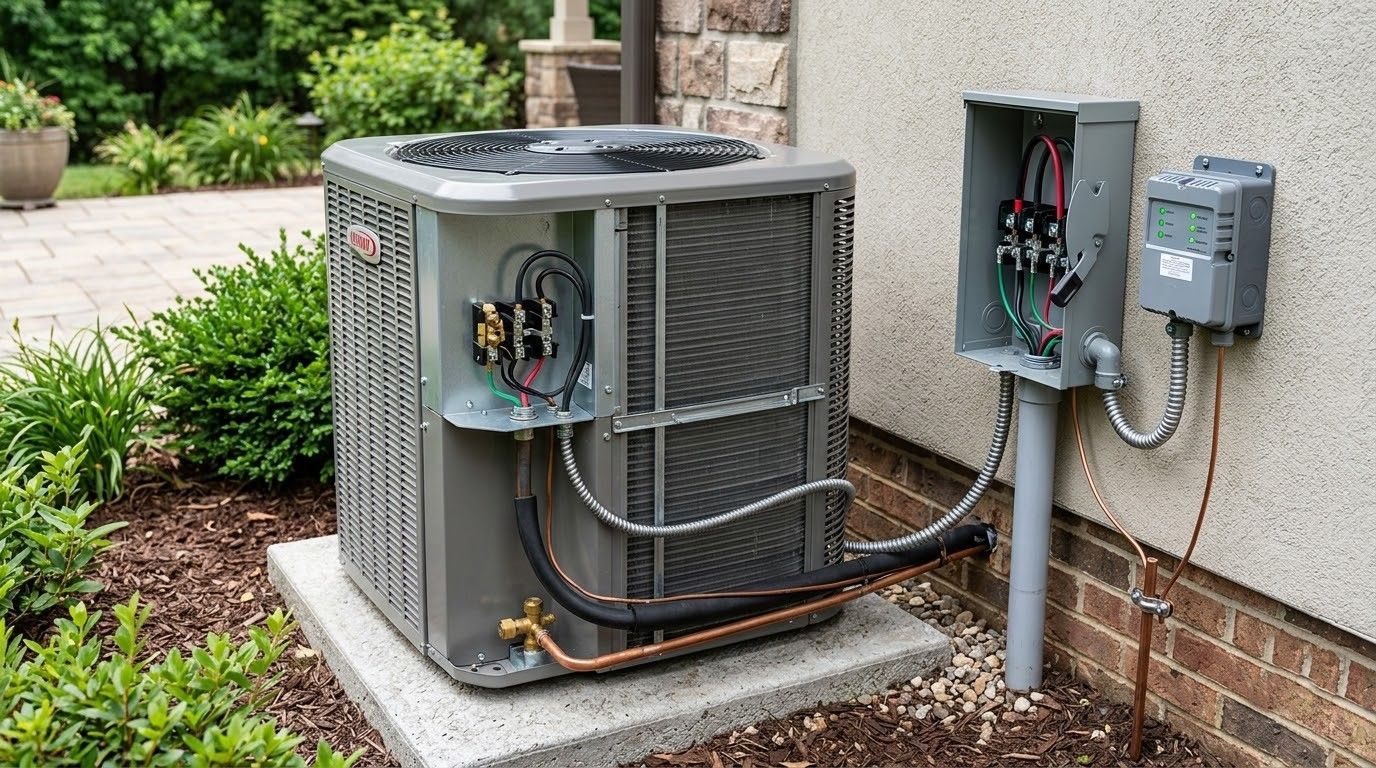
INDOOR UNIT
Air Handler Protection
The indoor board, blower drive, and control transformer all sit behind their own protection point. Damage here is less dramatic than a lost compressor but still expensive and awkward to source quickly.
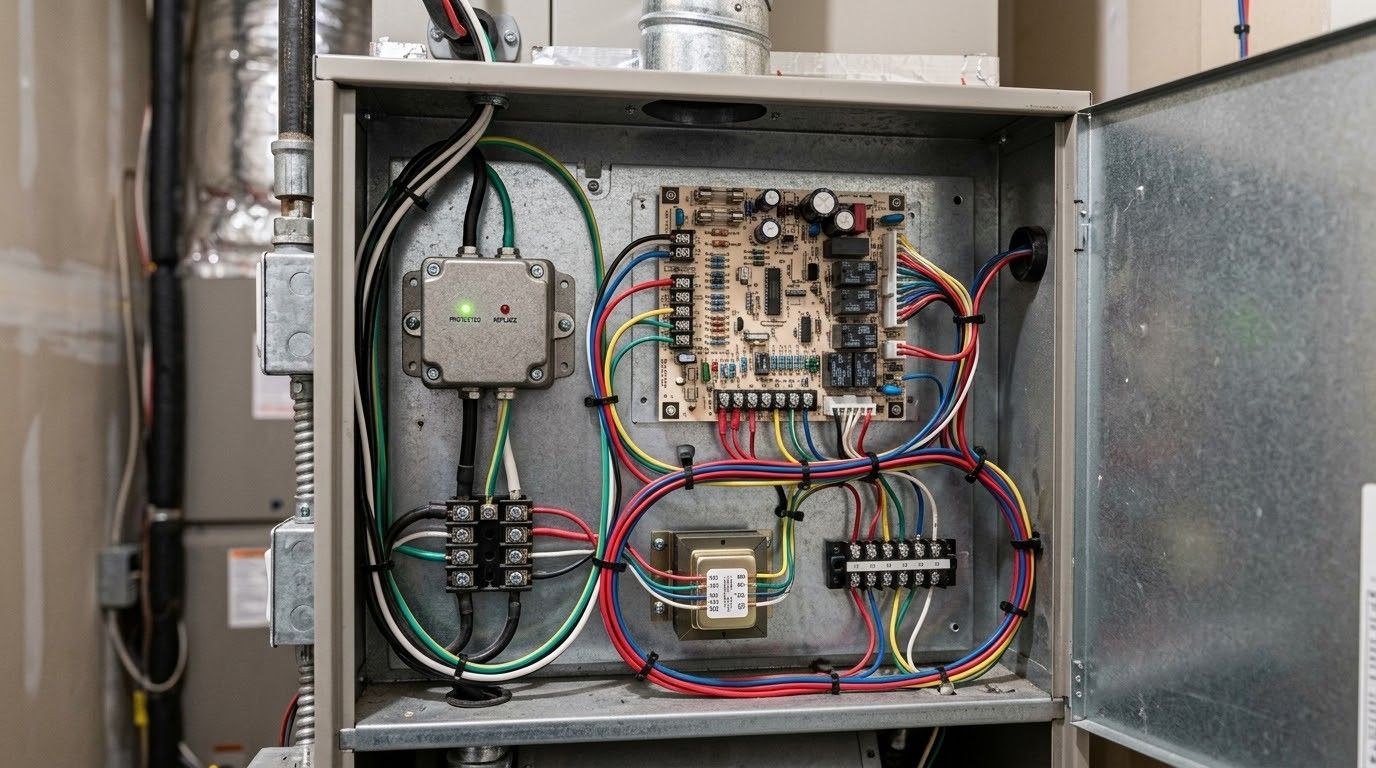
WHOLE HOME
Panel-Mounted Surge Protection
A device at the main electrical panel is the first line of defense for everything in the house. It reduces the energy reaching every downstream circuit, including both halves of your system.
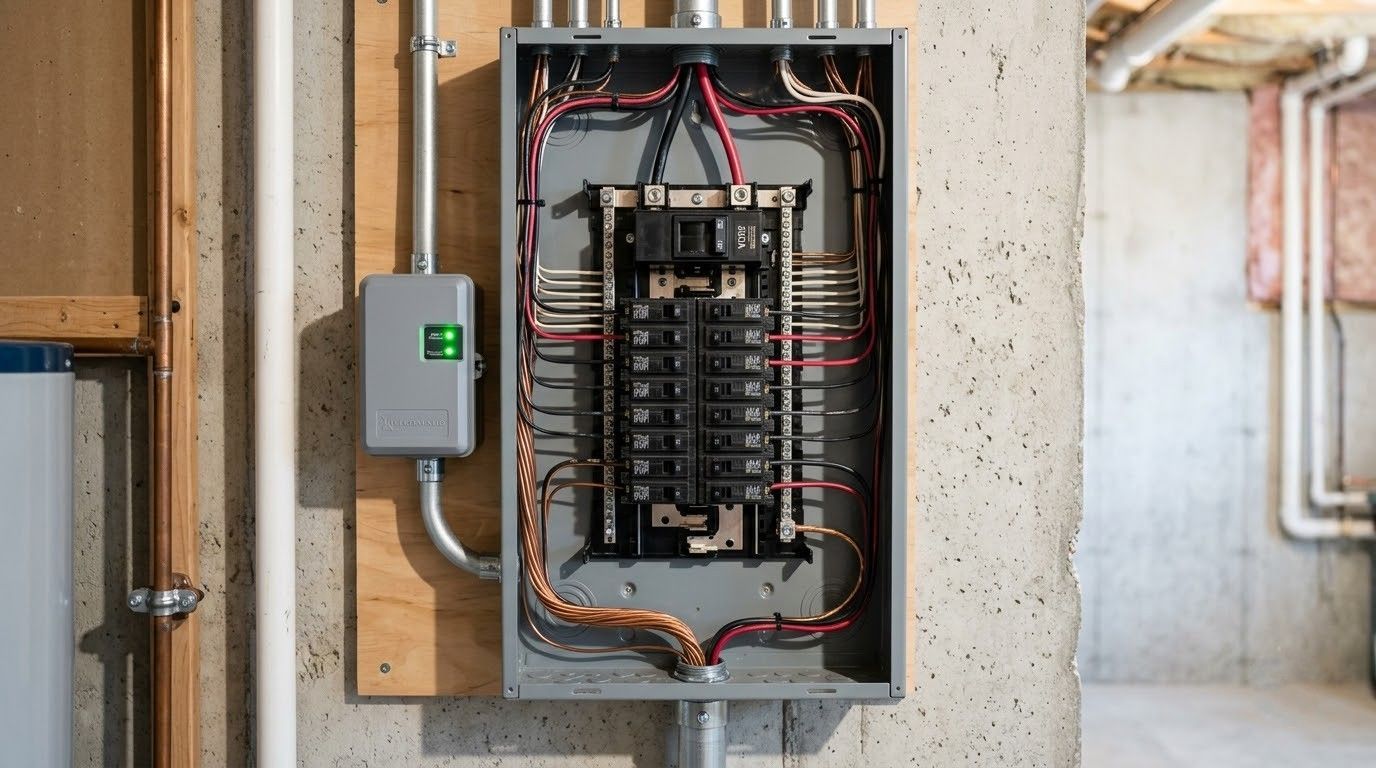
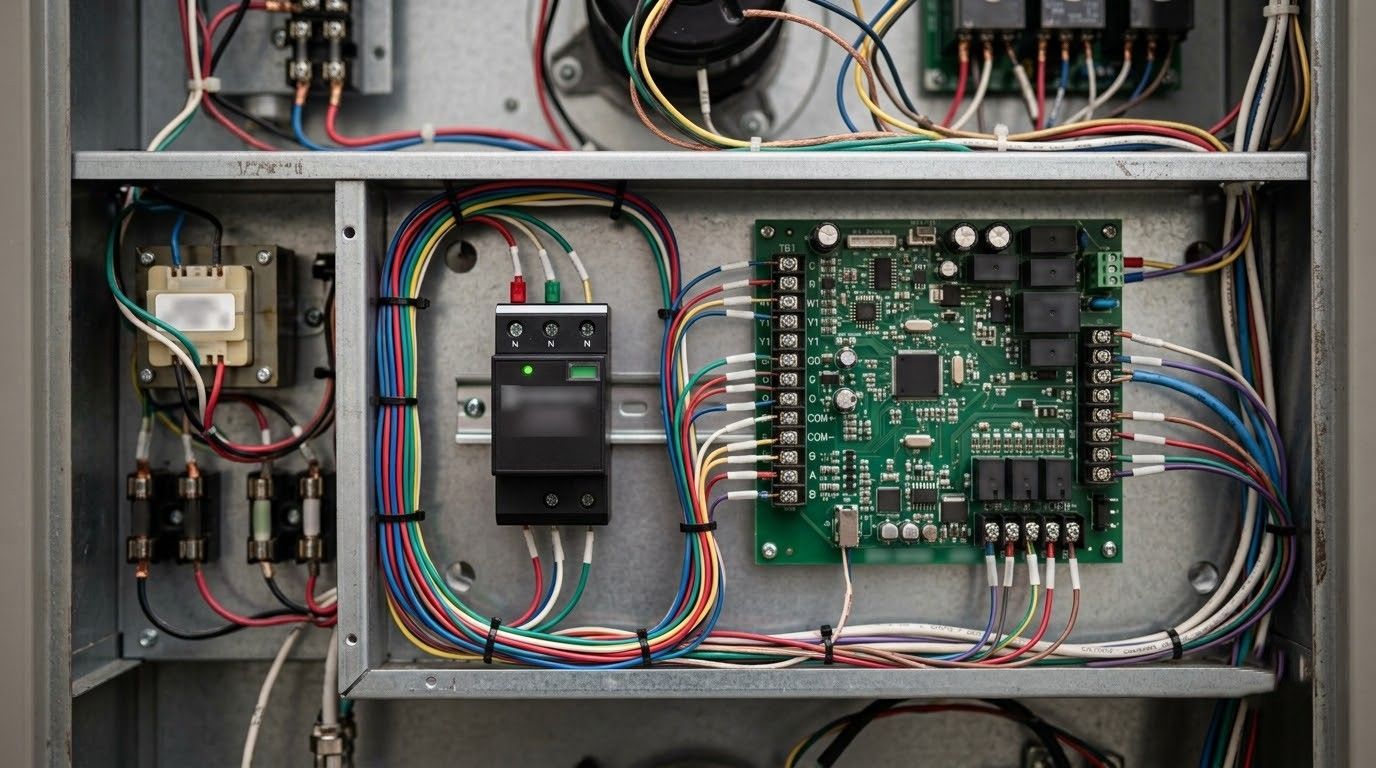
LOW VOLTAGE
Control Circuit Protection
Thermostat and communication wiring carries surges too, particularly on long runs. Protecting the low-voltage side keeps smart controls and communicating equipment from failing for reasons nobody thinks to check.
COMMERCIAL
Commercial Equipment Protection
Rooftop units, multiple systems, and three-phase equipment all need protection sized appropriately. Downtime costs a business considerably more than it costs a household, so the case here is even stronger.
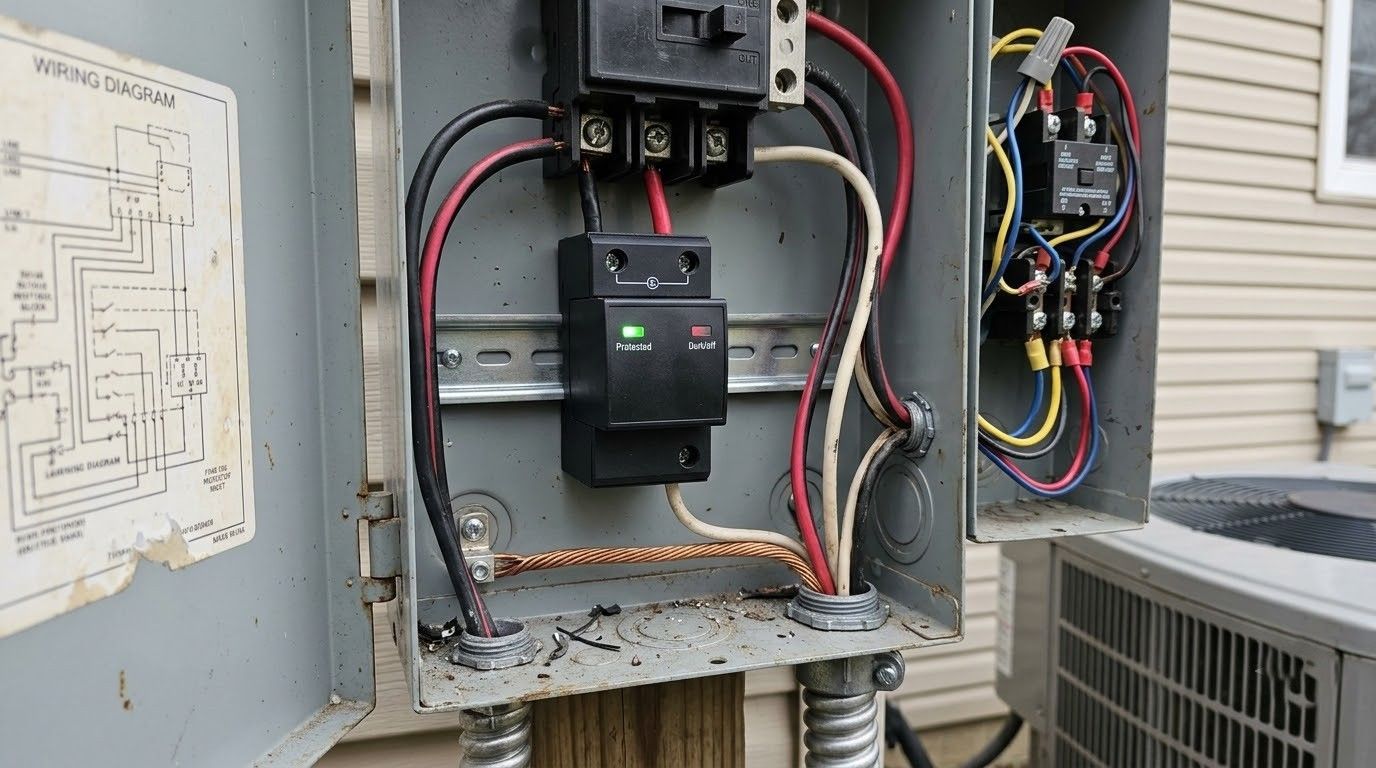
INSPECTION
Protector Status Checks
Surge devices wear out as they absorb hits, and many fail silently. We check indicator status at every maintenance visit and replace units that have already spent their protective capacity.
THE WORD ON OUR WORK
WHAT OUR CLIENTS SAY.
Surge protection reviews tend to arrive after a storm rather than after the installation. Customers write in when a neighbor lost a system on the same night and theirs kept running, which is the only test that ever really matters here.
Common Questions
frequently asked
questions.
These questions come up whenever we recommend surge protection during a service visit. If yours is not below, ask the technician while they are at the panel.
Is an HVAC surge protector really worth it?
For modern equipment in a lightning-prone area, generally yes. A protector costs a small fraction of a compressor or inverter board, and induced surges from nearby strikes are common here every summer.
Does my whole-home surge protector already cover the AC?
Partially. A panel device reduces incoming energy but does not stop surges induced on the branch circuit itself. Dedicated protection at the condenser adds the layer that whole-home units cannot provide.
Will a surge protector stop a direct lightning strike?
No device stops a direct strike outright. What these units handle well is the far more frequent induced surge and switching transient, which together cause the large majority of the damage we see.
How do I know if my system was damaged by a surge?
Symptoms include a system that will not start after a storm, a burned smell at the air handler, tripped breakers, or a control board with visible scorching. Damage sometimes appears days later.
How long do surge protectors last?
They degrade as they absorb energy rather than aging on a calendar. Most carry a status indicator, and Mission Air Services, Inc. checks these during every maintenance visit across Plant City, FL.
Can a surge protector be added to an older system?
Yes. Older equipment has fewer electronics but still has motors, contactors, and a control transformer worth protecting, and fitting a device takes very little time on a standard service call.
Does surge damage void my manufacturer warranty?
Warranties cover manufacturing defects rather than external electrical events, so surge damage is normally excluded outright. That exclusion is precisely the gap a surge protector is intended to close for you.
Where exactly does the protector get installed?
Usually at the outdoor disconnect for the condenser and inside the air handler cabinet for the indoor board. Whole-home units mount at or beside the main electrical panel instead.
We Finalize Your Order
STEP 04
Once you choose a product, we confirm every specification, from swing direction to hardware preparation, before placing the order, so the door that arrives matches what was actually agreed upon.
HOW WE WORK
FROM PANEL CHECK TO PROTECTED SYSTEM, HERE IS HOW.
STEP 01
WE LOOK AT WHAT YOU HAVE
Equipment age, electronics content, existing protection, and the condition of the electrical panel all get reviewed first. A simple older system needs a good deal less than a modern communicating one, and we will say so plainly.
STEP 02
WE ASSESS YOUR RISK HONESTLY
Utility feed quality, previous outage history, tree cover, and whether the property has taken storm damage before all shape the recommendation you receive. Not every home needs every layer we could sell it.
STEP 03
WE EXPLAIN THE LIMITS
You will hear plainly what a surge protector does and does not defend against before you decide anything. Overselling this equipment as lightning-proof is exactly how customers end up feeling misled a season later.
STEP 04
WE FIT THE DEVICES
Protectors are installed at the disconnect, inside the air handler, and at the main panel as agreed, with correct breaker coordination and secure grounding. Poor grounding makes any surge protector far less effective.
STEP 05
WE VERIFY AND LABEL
Each device is tested, its status indicator confirmed, and the installation clearly labeled so anyone working on the system later knows exactly what is fitted and where. Documentation goes into your file. Anyone servicing the system later can see it at a glance.
STEP 06
WE CHECK IT AT EVERY VISIT
Because these protectors deplete silently as they work, indicator status becomes a permanent part of your maintenance checklist from then on. A spent device gets flagged and replaced before the next storm season arrives.