
AIR DUCT REPAIR
AIR DUCT REPAIR IN Plant City, FL.
The average home loses close to a quarter of its conditioned air before it ever reaches a room. Mission Air Services, Inc. carries out air duct repair across Plant City, FL, Lakeland, and Polk County, locating leaks and sealing joints properly. Members save 15%, NATE-certified crews work under license CAC1820450, and written estimates are free on our contact page.
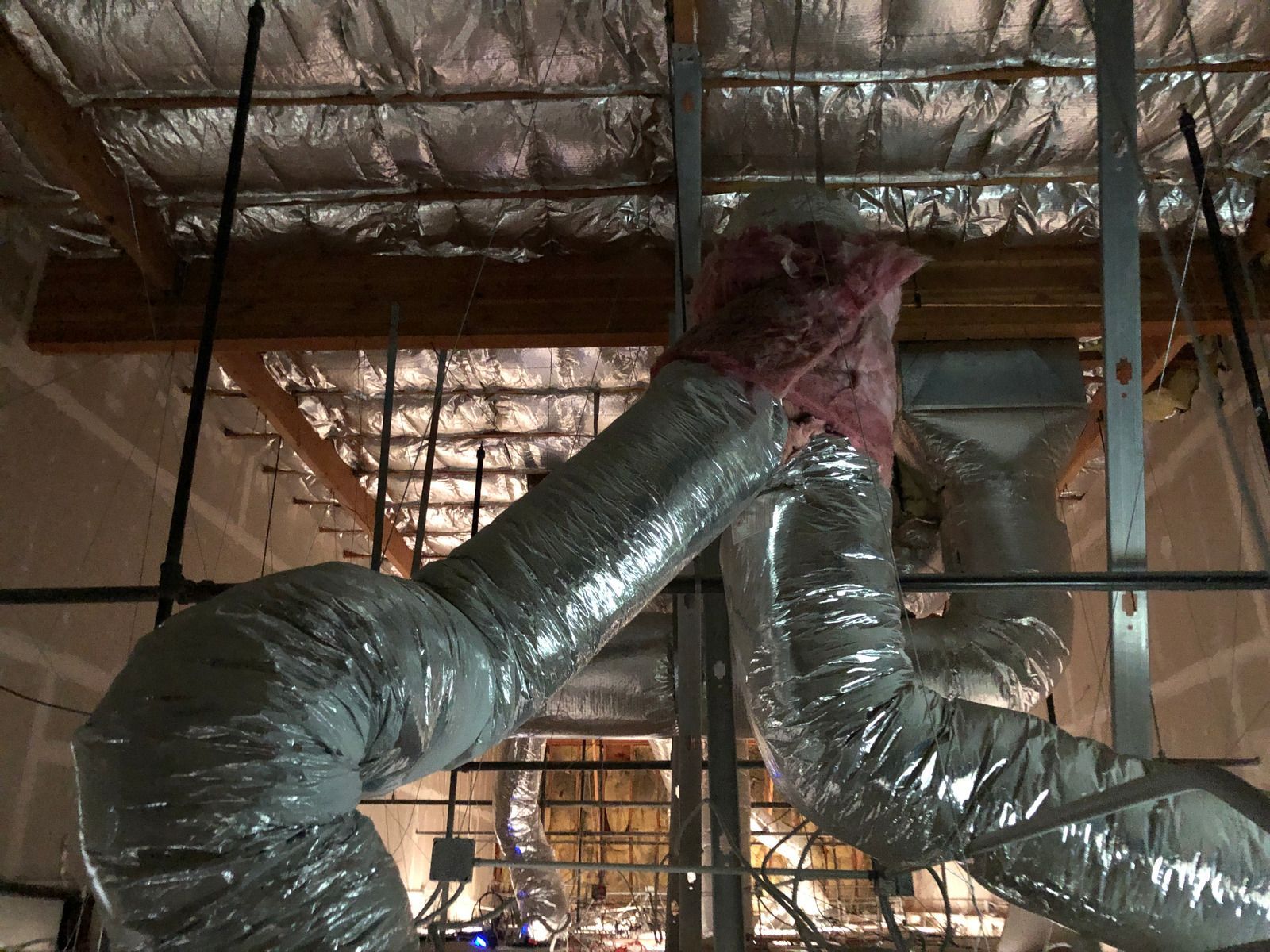
LEAKING DUCTS ARE THE MOST EXPENSIVE PROBLEM NOBODY SEES.
There is no warning light anywhere for a disconnected branch sitting in the attic. The system simply runs longer, one room stops cooling properly, dust accumulates faster than it should, and the bill creeps upward over a couple of seasons. Because the decline is gradual and the cause is out of sight, households usually blame the equipment and start pricing a replacement they do not actually need.
Finding and sealing the leaks is frequently the cheapest meaningful improvement available, and it costs a small fraction of new equipment.
- Leak location before any repair is quoted
- Static pressure measured to confirm the problem
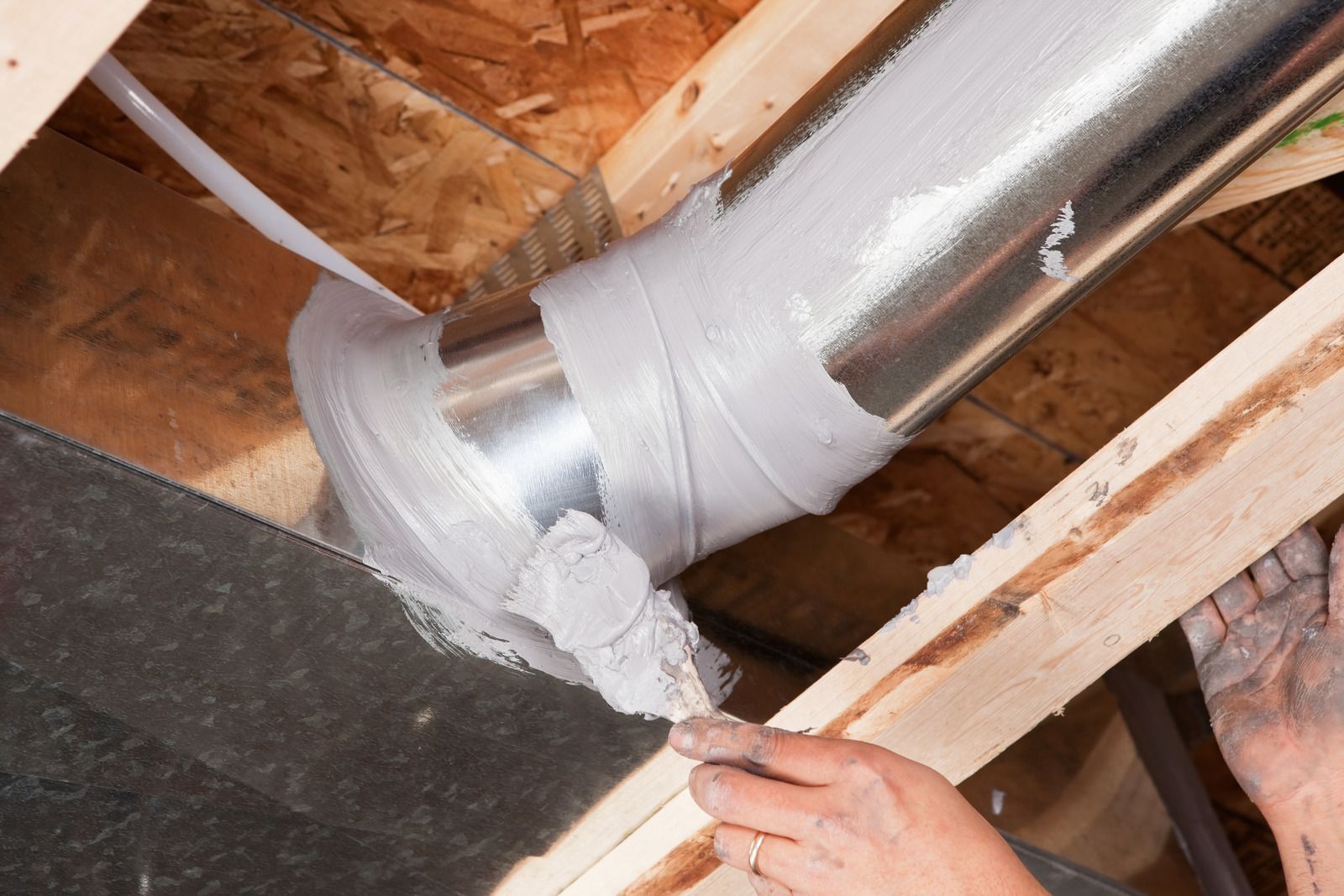
- Mastic sealing that lasts, not temporary tape
- Section replacement done under license CAC1820450
Quality doors from established manufacturers hold their finish and function longer than budget alternatives, which means fewer repairs and replacements over the life of your home. That durability protects the money you put into the purchase.
Long Term Value
AIR DUCT REPAIR
THE SYMPTOMS LOOK LIKE AN EQUIPMENT PROBLEM.
One room that never cools, a system that runs constantly, dust settling faster than it used to, humidity that will not drop, and a bill climbing without any change in habits. Every one of those reads as a failing air conditioner, and every one of them is regularly caused by ductwork instead. That is why we measure the distribution network before anybody starts pricing a new condenser for you.
SHAPED BY WHAT FL ATTICS DO TO DUCTWORK.
Heat, humidity, and time are hard on duct systems here. Tape adhesive fails, flex sags into water traps, insulation compresses and separates, and rodents open up runs that were sound for years. Because the attic is unconditioned and extremely hot, every one of those failures costs far more capacity than the same leak would in a cooler climate. We know where to look, because the failure patterns repeat.
LEAKS THAT OTHER CREWS TAPED OVER STILL TURN UP HERE.
A great deal of our duct repair work involves quietly undoing somebody else's earlier quick fix. Tape wrapped over a separated joint, a branch pushed back onto a collar without any strap, insulation tucked back over a hole rather than the hole itself being closed. Over 20+ years those patterns have become very easy to spot, and correcting them properly usually costs less than the original repair did.
WHAT SEALING YOUR DUCTS ACHIEVES
AIR DELIVERED WHERE YOU PAY FOR IT
Conditioned air stops disappearing into the attic and starts arriving at the register. Rooms that had been chronically underserved usually improve within hours of the repair being completed.
NOTICEABLY LOWER RUNNING COSTS
Recovering lost air means the system reaches setpoint faster and runs less. That reduction shows on the next bill and continues for as long as the sealing holds, which is decades.
MOISTURE PULLED OUT PROPERLY
Leaking returns pull hot, damp attic air straight into the system. Sealing them removes that moisture load entirely, which frequently resolves a clammy house on its own.
LESS DUST THROUGH THE HOUSE
Unsealed returns draw in attic dust and insulation fibers and distribute them everywhere. Closing those leaks reduces the dust load considerably without adding any filtration equipment at all.
REDUCED STRAIN ON EQUIPMENT
A system fighting duct losses runs longer cycles at higher pressure. Removing the leaks lowers runtime and static pressure, both of which extend the working life of the blower and compressor.
EVEN TEMPERATURES END TO END
Once each branch delivers its intended volume, rooms stop competing. The thermostat setting starts producing the same result at both ends of the house rather than only near it.

WHAT WE REPAIR
OUR AIR DUCT REPAIR WORK.
Duct faults fall into a familiar set. We identify which apply to your system before quoting, because the right repair varies considerably from one to the next. We show you photographs of each fault before quoting anything.
SEPARATIONS
Disconnected Duct Runs
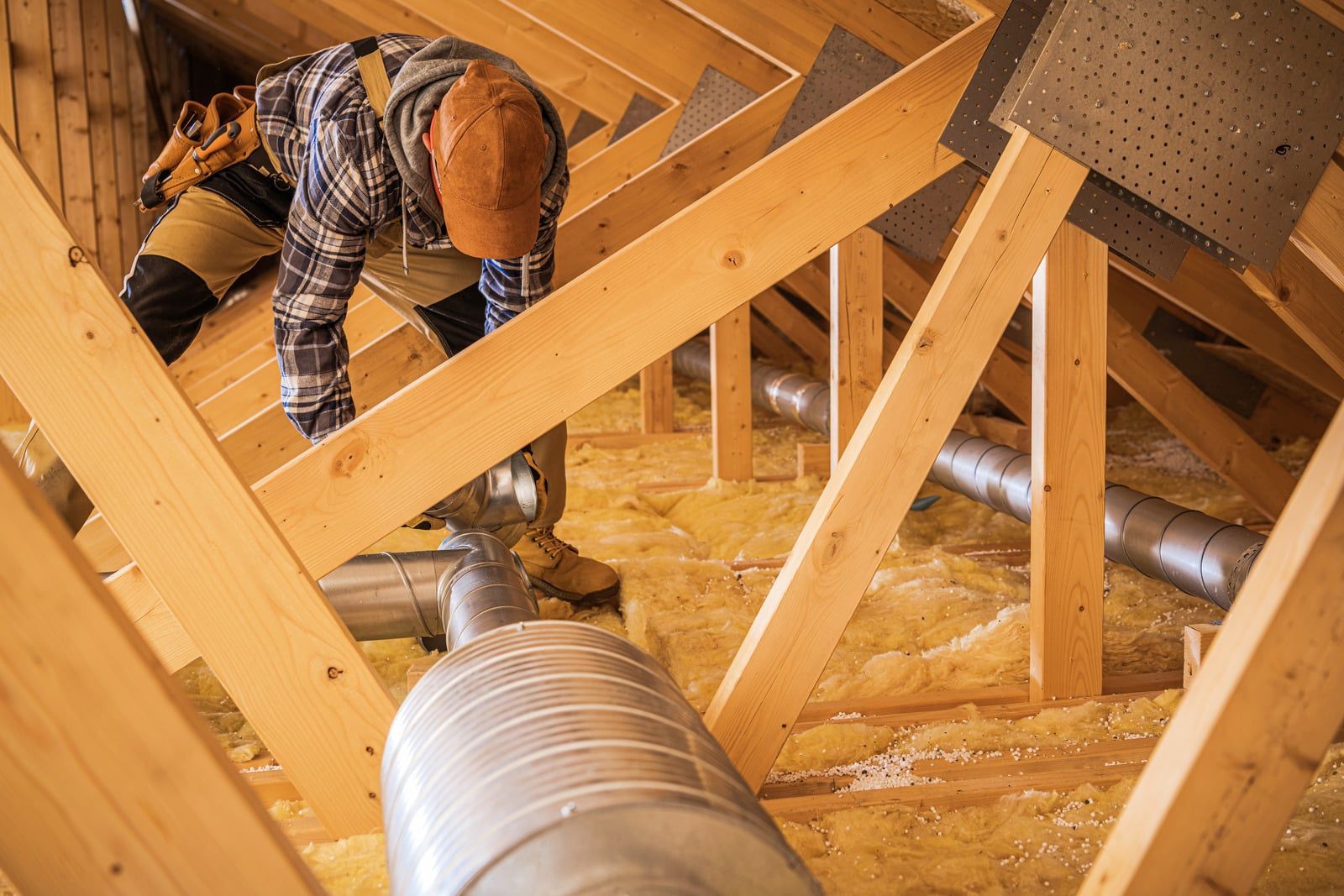
A branch that has come off its collar dumps its entire output into the attic. These are the most costly single fault and often the quickest one to put right permanently.
LEAKS
Joint and Seam Sealing
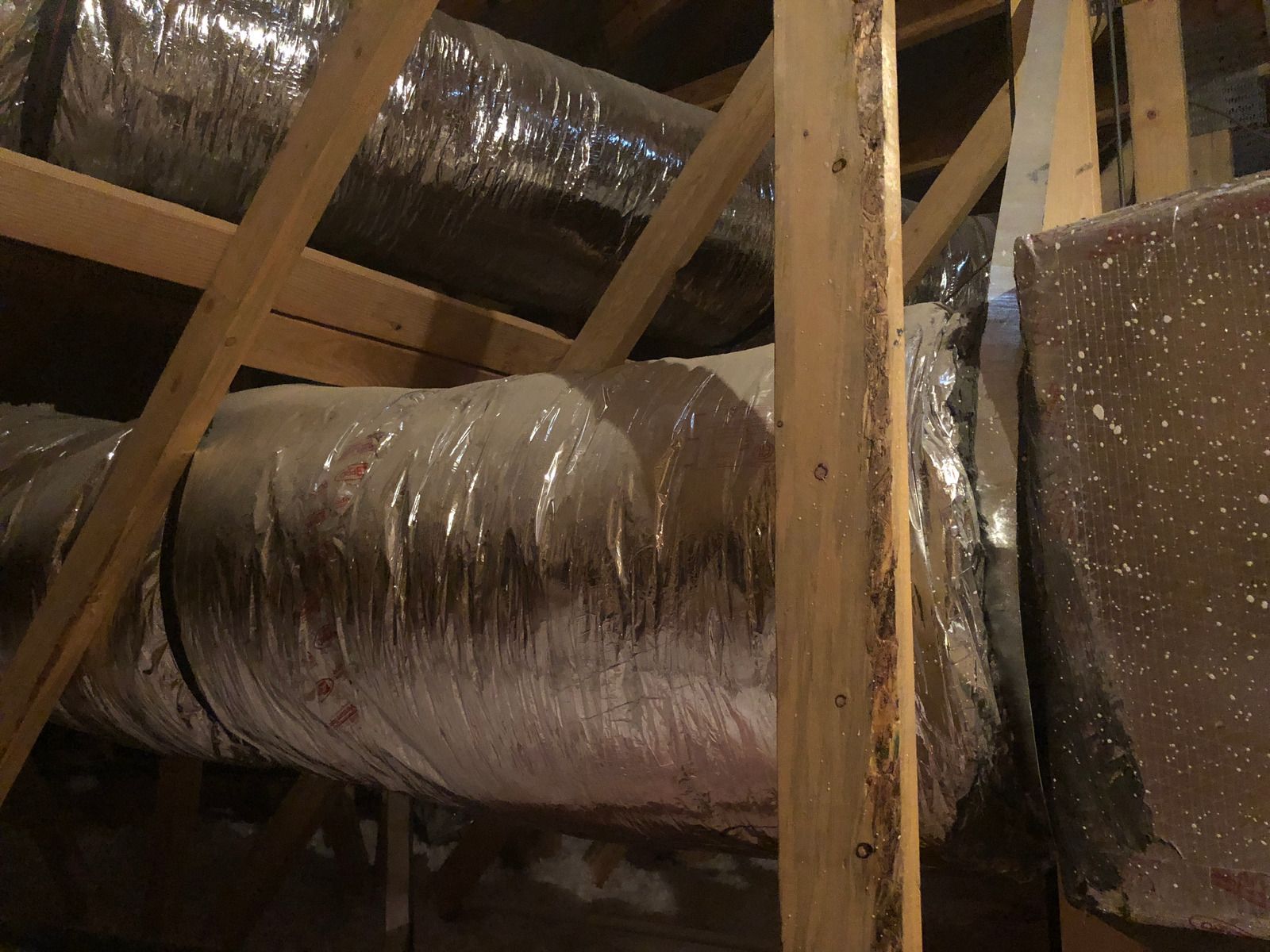
Failed tape, open seams, and poorly made connections all bleed conditioned air. We seal each with mastic and reinforcing mesh where needed, which holds for the life of the run.
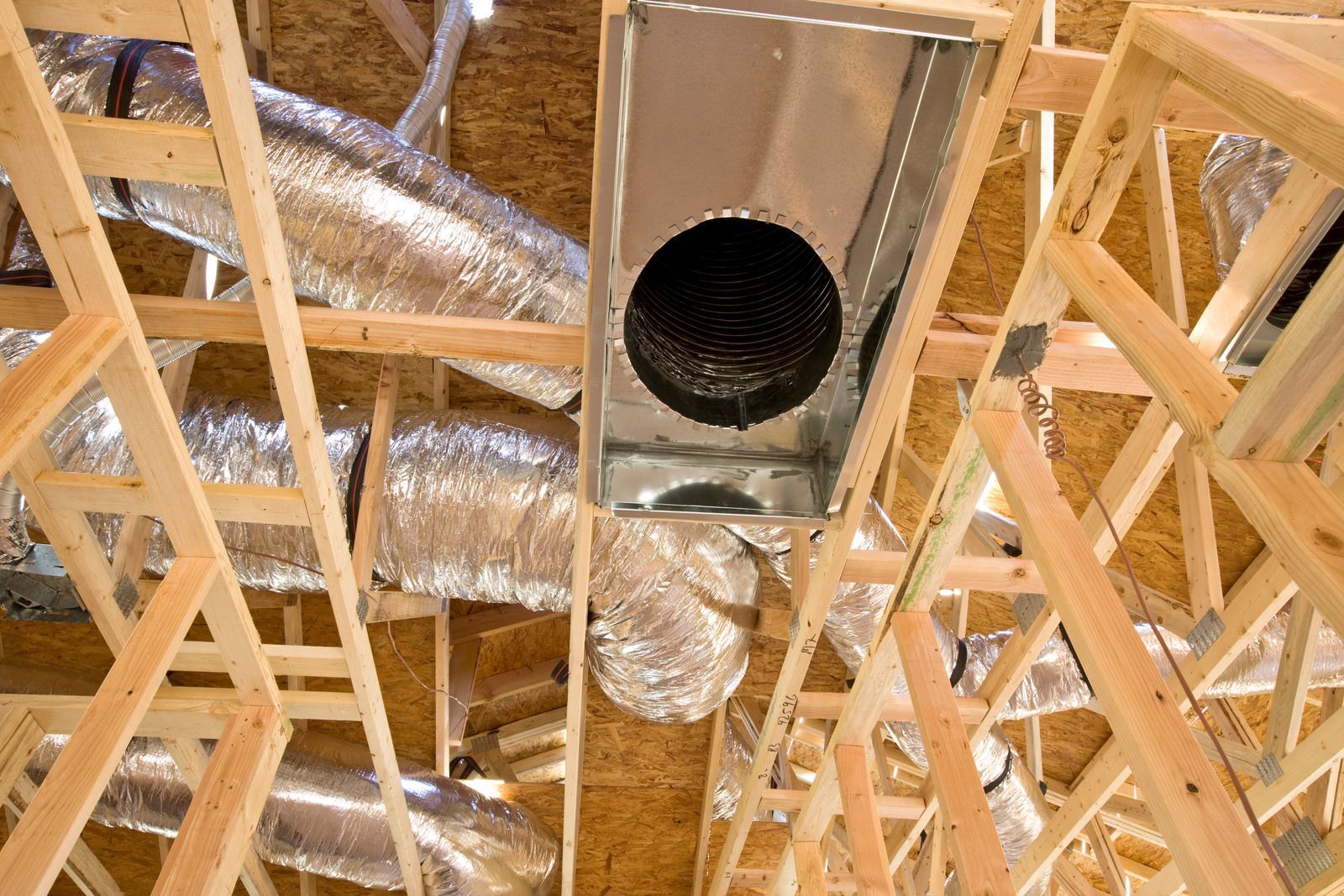
CRUSHED RUNS
Restricted and Crushed Ducting
Flex crushed under stored items or kinked around a tight corner strangles airflow to everything downstream. We reroute or replace the affected section rather than simply straightening it out. Static pressure is remeasured once the section is replaced.
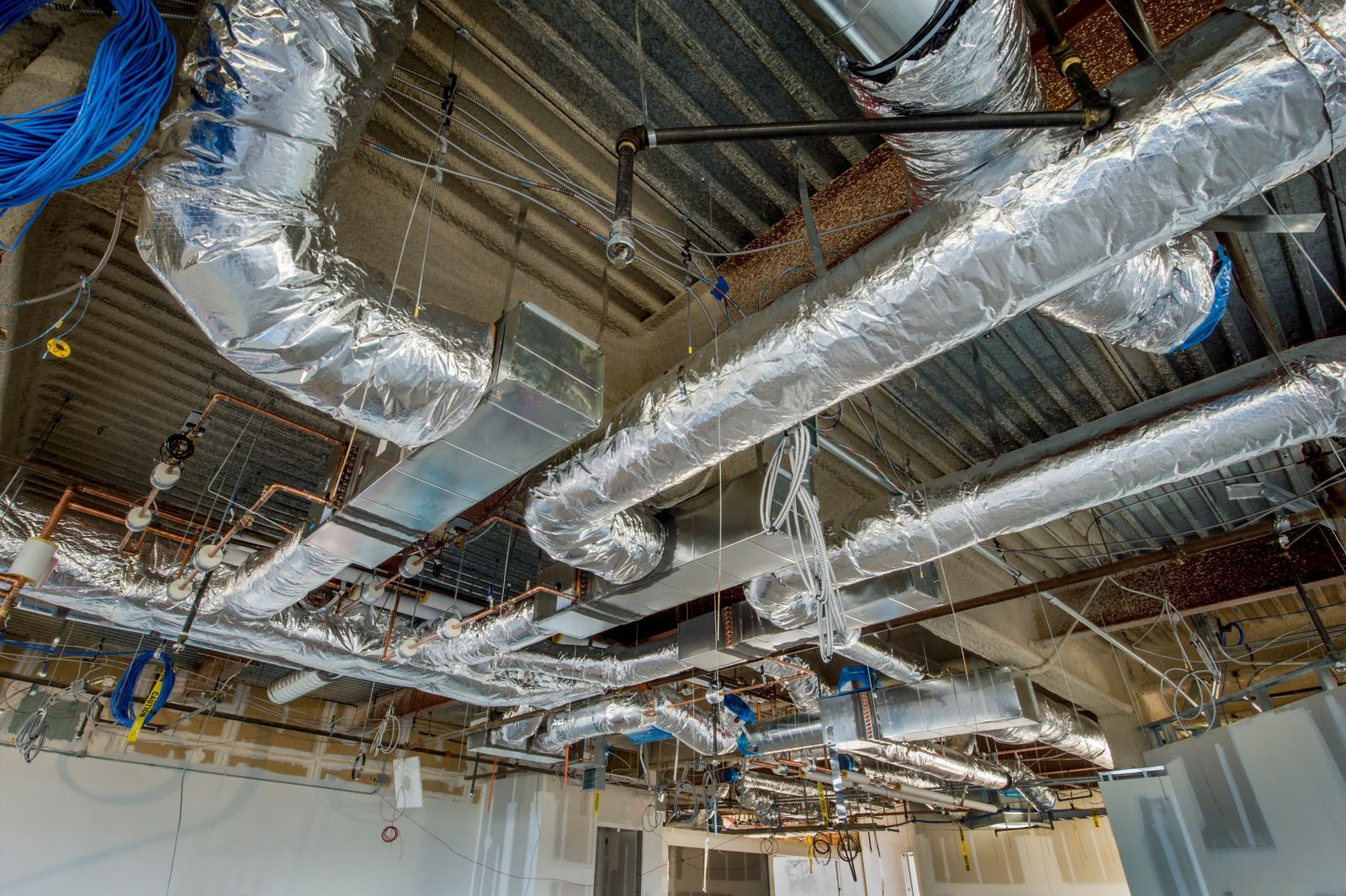
INSULATION
Duct Insulation Repairs
Compressed, torn, or missing insulation lets attic heat rob capacity from the air inside the run. Restoring proper insulation value recovers cooling that was being lost silently. Vapor barriers are resealed at the same time.
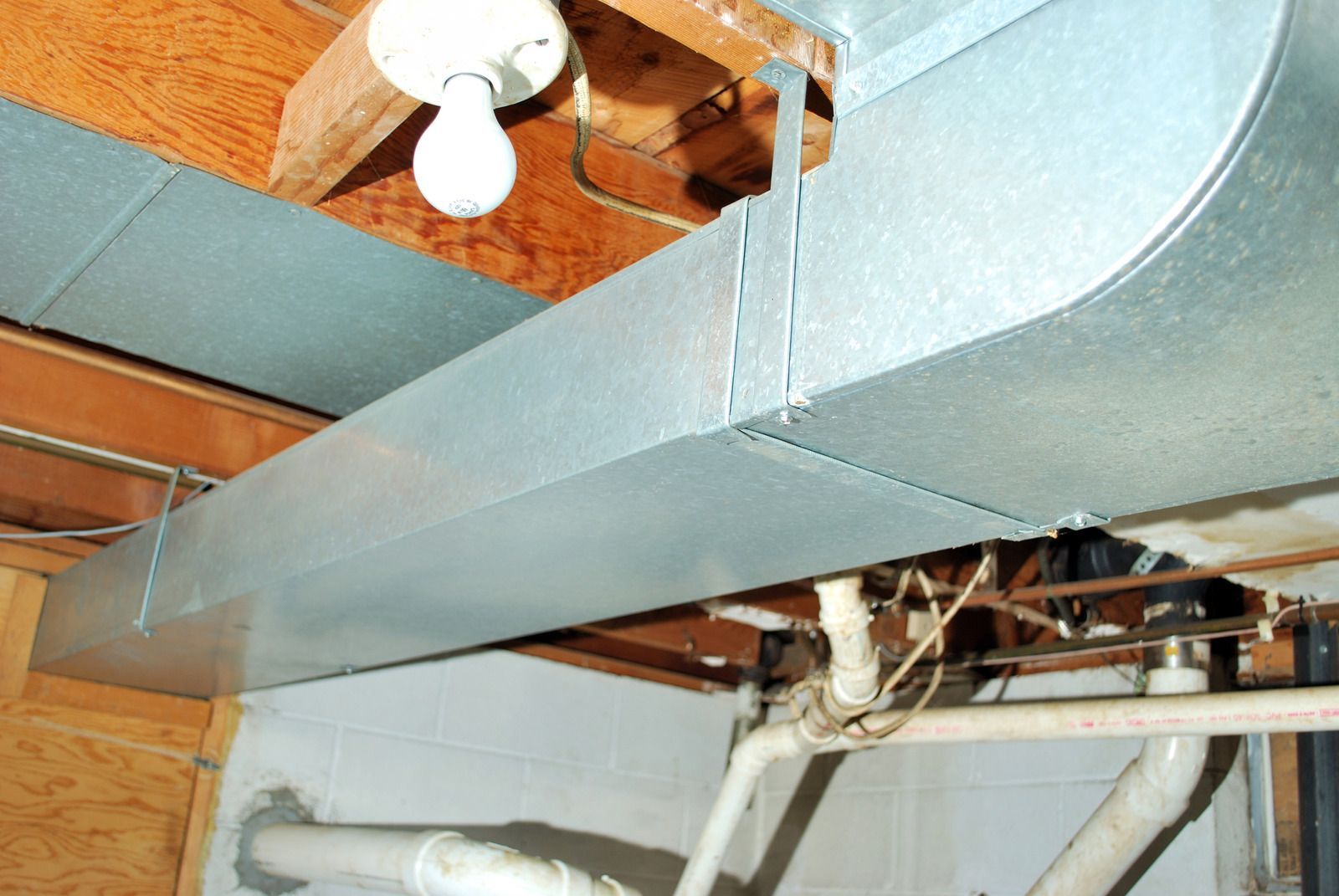
PLENUMS
Plenum and Connection Repairs
Leaks at the plenum lose air before it even enters the network, which makes them the most damaging leaks in the whole system. Sealing them properly is high-value, straightforward work.
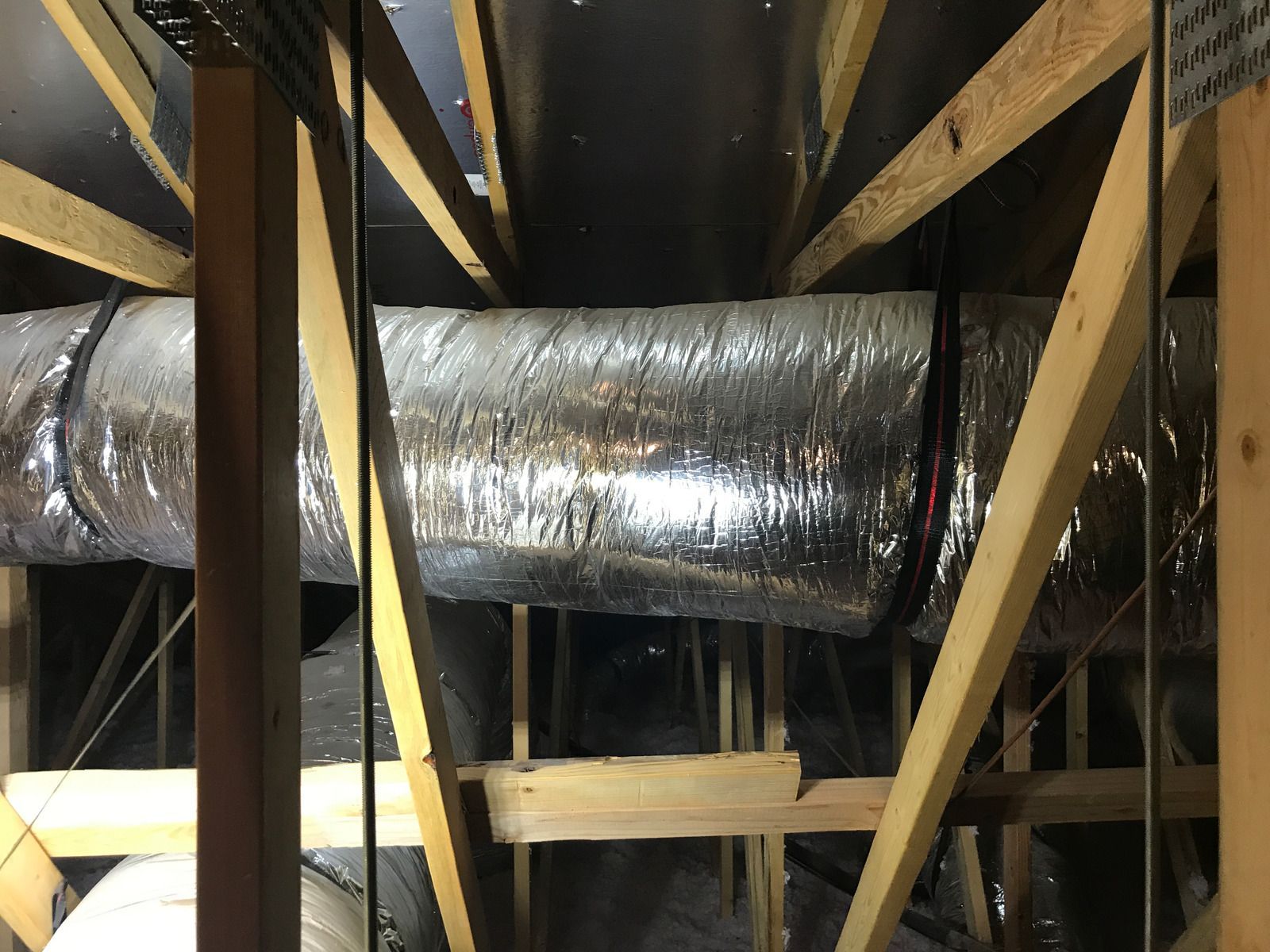
RETURNS
Return Duct Sealing
Return leaks pull unconditioned attic air into the system, adding both heat and humidity. Sealing the return side often produces a bigger comfort improvement than sealing the supply side does.
THE WORD ON OUR WORK
WHAT OUR CLIENTS SAY.
Duct repair reviews frequently mention relief as much as results. Customers had been quoted for a new system, asked for a second opinion, and discovered the actual problem was a separated branch in the attic that cost a fraction to put right.
Common Questions
frequently asked
questions.
These questions come up whenever we recommend duct repair after a service call. Ask the technician about anything else while the attic access is still open.
How do I know if my air ducts are leaking?
Common signs are one room that never cools, unusually fast dust accumulation, high bills without a change in usage, and a system that runs almost continuously. Static pressure measurement confirms it.
How much air do leaking ducts actually waste?
Industry figures put typical losses at 20% to 30% of conditioned air in an average home. In an attic far hotter than outdoor temperature, the practical cost is higher than that percentage suggests.
Can duct leaks be repaired or must ducts be replaced?
Most leaks are repairable by sealing and reconnecting. Replacement becomes the better answer when runs are crushed, badly deteriorated, or undersized for the equipment they are being asked to serve.
Is duct tape suitable for sealing ducts?
No, despite the name. Its adhesive fails within a few years in attic heat. Mastic remains flexible and bonded for decades, which is why we use it on every Plant City, FL repair.
Will sealing my ducts fix a hot room?
Frequently, particularly when the branch serving that room has separated or leaks badly. Where the branch is simply undersized, sealing helps but resizing that run is the complete answer. We measure that branch before recommending either.
How long does duct repair take?
Most sealing and reconnection work finishes within a day, often in a few hours. Extensive damage across a large attic, or difficult access, can extend that and we tell you beforehand.
Do leaking ducts affect indoor air quality?
Yes. Return-side leaks pull attic dust, insulation fibers, and humid air directly into the system and distribute them through the house. Sealing them improves what circulates indoors considerably. Sealing costs far less than added filtration would.
Will duct repair help with humidity?
Usually a great deal, because return leaks bring hot damp attic air into the airstream. Removing that moisture load lets the coil work on the house rather than on the attic.
We Finalize Your Order
STEP 04
Once you choose a product, we confirm every specification, from swing direction to hardware preparation, before placing the order, so the door that arrives matches what was actually agreed upon.
HOW WE WORK
FROM LEAK HUNT TO SEALED SYSTEM, HERE IS HOW.
STEP 01
WE MEASURE THE SYSTEM FIRST
Static pressure and register airflow readings establish whether the network is genuinely the problem. Measuring before diagnosing avoids selling duct work to a house that needs something else. The starting figures also become your comparison afterward.
STEP 02
WE INSPECT EVERY ACCESSIBLE RUN
The attic gets walked properly: connections, seams, supports, insulation condition, and any rodent damage all get recorded. Photographs of anything found go into your written proposal. Anything inaccessible is noted honestly rather than quietly ignored, so the scope stays truthful.
STEP 03
WE IDENTIFY THE PRIORITIES
Not every leak is worth the same money. Plenum and return-side losses cost far more than a minor supply seam, so the proposal ranks the work by what it actually recovers. You decide how far down that list to go.
STEP 04
WE QUOTE IN PLAIN TERMS
You receive a written price showing what gets sealed, what gets reconnected, and what needs replacing rather than repairing. Nothing proceeds until you have agreed to that scope. Member pricing is applied automatically where it qualifies.
STEP 05
WE SEAL AND RECONNECT
Separated runs are reattached and strapped, seams sealed with mastic and mesh, crushed sections replaced, and insulation restored. Tape is not used as a permanent seal anywhere on the job. Insulation and vapor barriers are restored over every repair.
STEP 06
WE RETEST AND SHOW YOU
Static pressure and register airflow are measured again after the repair. Comparing those figures against the starting readings shows exactly what the work recovered, in numbers rather than claims. Both sets of readings stay with your paperwork afterward.