Strange Sounds From Your Air Conditioner and What Each One Means
October 12, 2026
QUICK ANSWER: Every unusual air conditioner noise points to a specific part. Squealing usually means a failing motor bearing or a slipping belt. Grinding means metal on metal, often a bearing or the compressor. Buzzing points to an electrical problem such as a failing capacitor or contactor. Clicking is normal at startup but a problem if it repeats. Hissing can signal a refrigerant leak, and banging means a loose or broken part inside the unit. Rattling is often a loose panel or debris. Grinding, loud banging, and repeated clicking are reasons to shut the system off and have it diagnosed before running it again.
It is the middle of the night, the house is quiet, and your air conditioner kicks on with a sound it never made before. Maybe it is a shriek, maybe a rhythmic knock, maybe a low buzz that rattles the window frame. You lie there trying to decide whether to get up and shut it off or hope it settles down by morning.
Here in Plant City and across Hillsborough and Polk counties, an air conditioner can run from early spring well into fall, sometimes close to twenty hours a day in July. That kind of workload wears parts out, and worn parts almost always announce themselves with sound before they fail outright. Your ears are one of the best diagnostic tools you own, as long as you know what you are listening to.
Not every noise is an emergency. Some are harmless and some are the system asking for help. The difference comes down to the type of sound, when it happens, and where it comes from. Below is a plain guide to the sounds we hear about most, what is usually behind each one, and when the right move is to turn the system off and call.
First, Pay Attention to the Details of the Sound
Before you decide what a noise means, gather a few facts. A technician will ask for them, and they narrow the cause quickly.
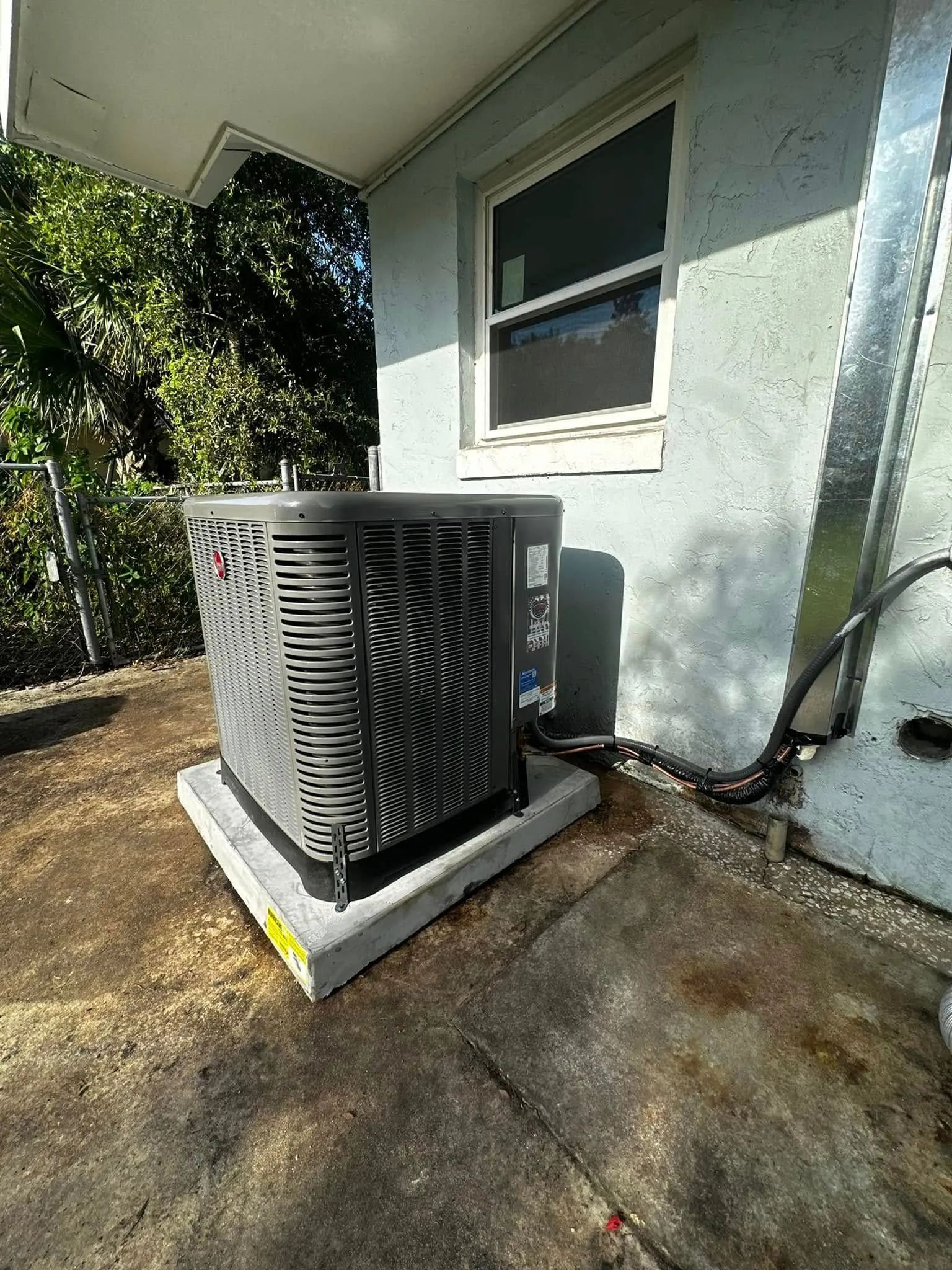
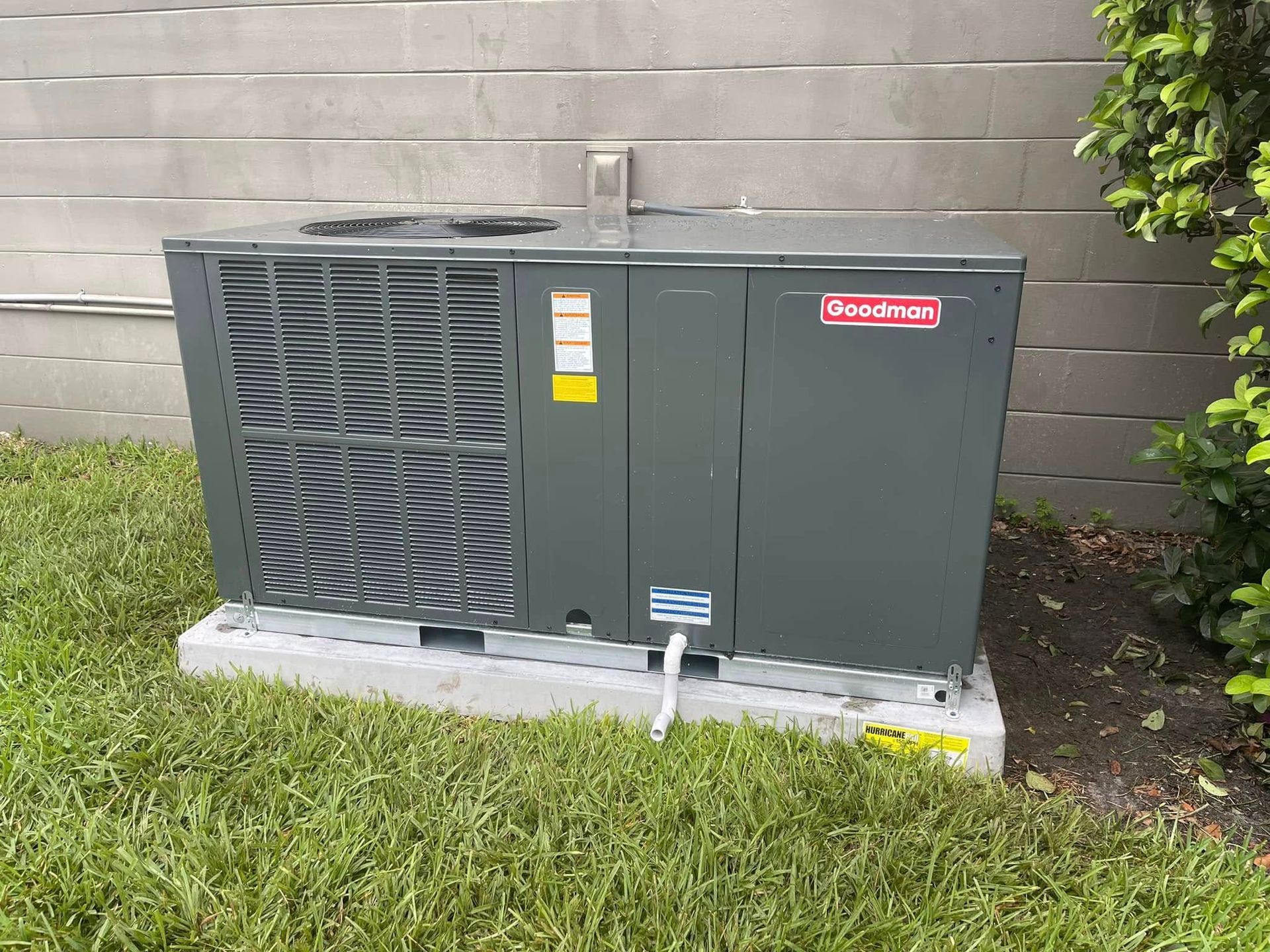
Where is it coming from? A sound from the outdoor unit points to the compressor, the condenser fan motor, or the electrical components in that cabinet. A sound from the air handler in the closet, garage, or attic points to the blower, the indoor coil area, or the ductwork. A sound from the vents themselves often has to do with airflow.
When does it happen? A noise only at startup is different from one that runs the whole cycle, and a noise at shutdown is different again. A sound that comes and goes with the weather, or only in the afternoon when the unit works hardest, tells you something too.
What does it sound like? Try to describe it in plain terms. Squeal, grind, buzz, click, hiss, rattle, bang, and whistle each point toward a different set of parts. The rest of this article follows that list.
Squealing or Screeching
A high pitched squeal is one of the most common complaints, and it almost always involves something spinning that should not be making friction. In an older system with a belt driven blower, a worn or slipping belt squeals as it slides across the pulley. Most modern systems use direct drive motors without belts, so on newer equipment a squeal more often means a failing motor bearing in the blower or in the condenser fan.
Bearings wear out when the lubrication breaks down, and a long, hot, humid cooling season speeds that along. At first the squeal may come and go, usually when the motor is cold or just starting. Over time it becomes constant. A motor that squeals today can seize in a few weeks, and a seized motor means no airflow and a system that stops cooling on the hottest afternoon of the week.
A different kind of squeal, a sharper and more piercing one that comes from the compressor, is a more serious sign. High pressure inside the system can produce a screech, and that is a reason to shut the unit off right away rather than keep running it.
Grinding
Grinding sounds like metal scraping on metal, and it is rarely good news. The two most common sources are a motor bearing that has failed completely and a compressor with internal damage. In the blower, a worn bearing or a wheel that has shifted can rub against its housing. In the outdoor unit, a grinding compressor is often the end of a long decline in lubrication or a sign of electrical stress.
Grinding is one of the sounds where the right answer is to stop. Every minute a grinding part keeps running removes more metal, spreads debris through the system, and turns a repair that might have been limited to a motor into a larger repair involving the compressor. Turn the system off at the thermostat, and if you are comfortable doing so, switch it off at the breaker as well.
Buzzing and Humming
Electrical components make a lot of the noise an air conditioner produces, and a buzz usually traces back to one of them. A soft hum while the system runs is normal. A louder buzz, or a buzz that starts but is followed by silence, is not.
A failing capacitor is the leading culprit. The capacitor gives the compressor and fan motors the jolt of energy they need to start and helps them run steadily. When it weakens, the motor tries to start, hums, and cannot turn. You might hear the outdoor unit buzz for a few seconds and then quit, or hear the fan hum without spinning. Capacitors in Florida heat fail often, because summer heat and afternoon storms are hard on them.
A contactor, the electrical switch that sends power to the outdoor unit, can also buzz when its contacts are pitted or when something is sitting in the way, such as an insect nest or debris. Loose wiring at a connection can buzz as well, and a loose electrical connection is not something to wait on. Buzzing paired with a burning smell or a breaker that keeps tripping is a reason to shut the system off completely.
WARNING: A buzzing outdoor unit that will not start can overheat the compressor each time it tries. If the fan or compressor hums without turning, switch the system off at the thermostat and leave it off until a technician has tested the capacitor and the motor. Repeated attempts to restart a unit that cannot turn are one of the fastest ways to turn a small electrical repair into a failed compressor.
Clicking
Clicking has two very different meanings, and the difference is timing. A single click when the system starts and another when it shuts off is the sound of relays and the contactor doing their jobs. That is completely normal and is no cause for concern.
Clicking that repeats, though, tells a different story. A rapid, repeated click from the outdoor unit can mean the contactor is trying to engage and failing, or that a control board or thermostat is sending a bad signal. A ticking sound from the thermostat itself or from the air handler, when the system is not supposed to be running, can point to a relay or control issue. A repeated click at the outdoor unit that never turns into a running fan is worth a diagnosis, because the same fault that is clicking today can leave you without cooling tomorrow.
One more clicking note. Outdoor units expand and contract as they heat up and cool down, and some ticking as the metal cools after a cycle is ordinary. If the sound stops within a few minutes of the system shutting off, it is almost always just metal settling.
Hissing
A hiss can mean a few different things, and some of them are harmless. A faint hiss for a moment when the system shuts off is often just refrigerant pressure equalizing, and a soft hiss from the vents is airflow.
A steady hiss from the indoor coil or the outdoor unit that continues while the system runs, especially paired with weak cooling or ice on the lines, points toward a refrigerant leak. Refrigerant is not used up, so a system that has lost charge has a leak somewhere, usually at a joint, a valve, or a corroded section of the coil. Salt air near the coast and constant moisture inside the indoor coil both speed up corrosion in this area. A leak does not fix itself, and it gets bigger the longer the system runs low.
A louder hissing or a sound like escaping air from the compressor itself is more serious and can mean an internal problem. If you hear hissing along with a sudden loss of cooling, turn the system off and have it checked.
Banging and Clanking
A loud bang or a repeated clank from the system usually means a part has come loose or broken. Inside the outdoor unit, a fan blade that has come loose or bent can strike the cabinet, a compressor mount can fail, or a piece of the compressor itself can be knocking against the housing. Inside the air handler, a blower wheel that has come off its balance can bang against its housing as it spins.
Banging that happens once when the unit starts can also mean sudden changes in the ductwork, since metal ducts expand as cold air rushes through them and can pop or bang as they move. That sound is usually a single pop rather than a repeated knocking, and it tends to come from walls, ceilings, or the attic rather than from the equipment.
Anything that sounds like a repeated bang from the unit itself is a shutdown situation. A loose or broken part rotating at full speed can destroy everything near it, and the damage grows with every cycle.
Rattling and Vibration
Rattling is the most forgiving of the sounds, and the most common one to be nothing serious. A loose access panel, a screw that has worked itself out, a piece of debris that has blown into the outdoor unit after a storm, or a loose fan guard can all rattle and are easy to fix. After a Florida thunderstorm, it is common to find sticks, leaves, or small objects inside or against the outdoor cabinet.
Still, rattling can also be the early voice of something larger. A fan blade that is out of balance, a failing motor mount, or a loose copper line vibrating against the frame can all rattle at first and cause damage over time. If tightening a panel or clearing debris does not quiet it, have it looked at before it grows.
TIP: With the system turned off at both the thermostat and the breaker, walk around the outdoor unit and check for sticks, leaves, and loose panel screws, and look at the fan guard for anything touching the blades. Many rattles after a storm come from debris that landed on or inside the cabinet. Never put your hands near the fan or remove the cabinet cover with the power on.
Whistling and Whooshing From the Vents
A whistle at the vents or the return grille almost always comes down to airflow. A filter that is clogged enough to starve the system, a return that is too small for the amount of air the blower pulls, leaky ducts, or a gap around the air handler can all create a whistle as air is forced through a tight space.
Because weak airflow also leads to frozen coils and strained blowers, a whistling system should not be ignored. Start with the filter. If it is dirty, replace it and listen again. If the whistle remains, the problem may be in the ductwork, such as crushed sections, loose connections, or an undersized return. A technician can measure the airflow and pressure to find where the system is struggling.
Which Sounds Mean Shut It Off Now
Not every noise needs the same response, so here is a simple way to sort them.
Shut the system off and call if you hear grinding, loud or repeated banging, a screech from the compressor, buzzing with a failure to start, or hissing along with weak cooling. These sounds mean something is failing in a way that gets worse with every minute of operation.
Watch it closely and schedule a visit if you hear a new squeal that comes and goes, a repeated click at the outdoor unit, a persistent whistle at the vents, or rattling that does not go away after you clear debris.
Treat as normal a single click at startup and shutdown, a soft hum while running, a short hiss when the system shuts off, and ticking as the metal cools after a cycle.
The one rule that holds across all of them is that a sound that is new, getting louder, or paired with weak cooling, a burning smell, or a tripping breaker deserves attention. Equipment rarely gets quieter on its own.
Frequently Asked Questions
Why is my air conditioner suddenly so loud?
A sudden increase in noise usually means something has changed, such as a loose panel, a failing bearing, a weak capacitor, or a loose internal part. If the sound is grinding or banging, or cooling weakens, turn the system off and have it diagnosed.
Is a buzzing air conditioner dangerous?
It can be. A buzz often comes from a capacitor or contactor, and a motor that hums without turning can overheat. If buzzing comes with a burning smell or a tripping breaker, shut the system off until it is tested.
Is it normal for my AC to make noise when it turns on?
Some noise is normal, such as a click as the contactor engages, a soft hum, and the blower ramping up. A loud bang, a screech, grinding, or a startup that takes several tries is not normal.
Can a noisy air conditioner still be repaired, or does it mean replacement?
Usually a noise points to a single failing part, and replacing it clears the sound. The sooner it is diagnosed, the more likely the repair stays limited.
Listen Closely to What Your AC Is Telling You
Every unusual sound from an air conditioner points to a specific part, and learning to tell a squeal from a grind or a buzz from a click can save a repair from becoming a replacement. Harmless noises tend to be brief and predictable, while the troubling ones grow louder or arrive with weak cooling. Shutting the system off when something sounds wrong protects the motor, the compressor, and the electrical parts. Paying attention early keeps a small fault from spreading.
With 20+ years of experience working on cooling systems in Plant City, FL, Mission Air Services, Inc.
has learned that a sound usually announces a failing part long before the system quits. Locating the noise, testing the electrical components, and checking pressures and airflow narrows the cause to a single repair most of the time. Homeowners who act on an odd sound while it is still new usually avoid costly breakdowns and keep their systems running quietly through the long Florida cooling season.